
First Draft Outline
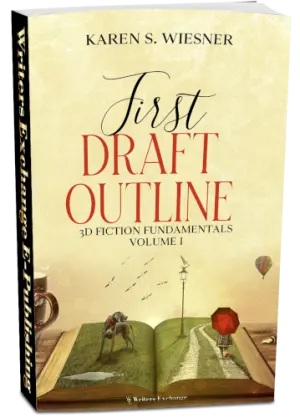
Book 1Say goodbye to writing and rewriting with no results. First Draft Outline provides you with a sure-fire system to reduce time-intensive rewrites and avoid writing detours, allowing you to create an ou…
Read More →



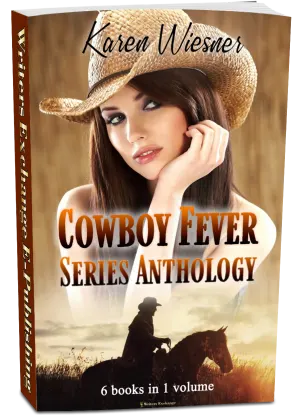 Cowboy Fever Series Anthology by Karen WiesnerMay 28, 2026Cowboy Fever Series Anthology is a compilation of five novellas and a novel in t...
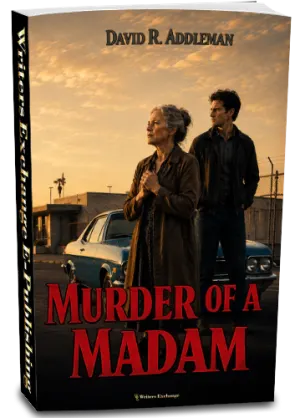 Murder of a Madam by David R. AddlemanMay 26, 2026She gave him a family. Someone made sure she'd never see tomorrow.
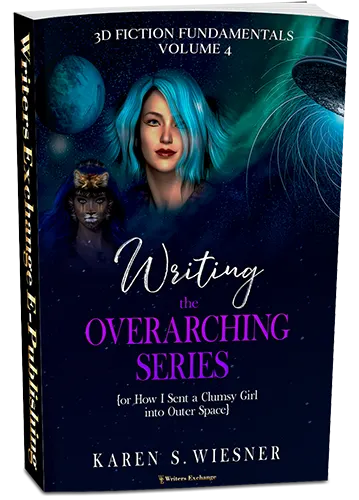
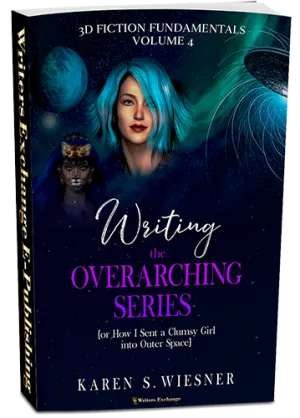 3D Fiction Fundamentals Collection, Book 4: Writing the Overarching Series (or How I Sent a Clumsy Girl into Outer Space) by Karen S. WiesnerApril 29, 2026The guide that covers what other series writing books do not.
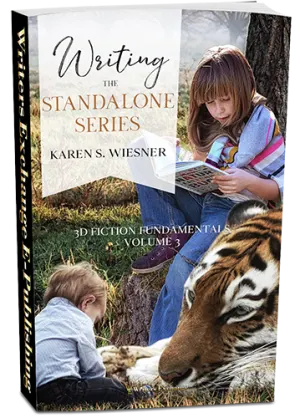 3D Fiction Fundamentals Collection, Book 3: Writing the Standalone Series by Karen S. WiesnerMarch 5, 2026Your series ideas deserve more than good intentions. Get the blueprint that turn...
 A Useless Series, Book 3: Useless and the School Fete by Margaret PearceNovember 26, 2025Escape the elves. Free the prisoners. Beat the clock.
 Mischief in Moonstone Series, Book 7: All She Wore Was a Bow by Christine DeSmetNovember 4, 2025He rolled into town to stop a wedding. He never planned on Mrs. Claus.
 Bloodmoon Cove Spirits Series, Book 11: Bad Blood by Karen WiesnerOctober 26, 2025Blood will have blood... George Maulson and Chenoa Eponi are some of the last de...
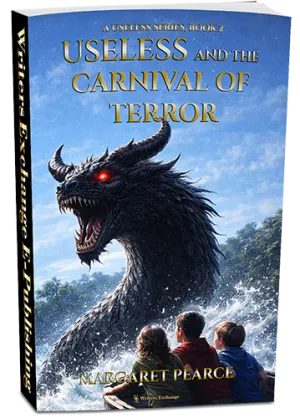 A Useless Series, Book 2: Useless and the Carnival of Terror by Margaret PearceSeptember 18, 2025The carnival gates swing open, but no one leaves. When Ewen "Useless" Euston and...
 The Use of Misdirection in Fantasy FictionMay 31, 2025Exploring Reader Reactions, Writer Strategies, and the Art of the Unexpected &nb...
 The Importance of Research in Historical Fiction WritingApril 9, 2025Historical fiction bridges the past and the present, offering readers a vivid gl...
 Uncovering Allegorical Elements in Classic Christian LiteratureMarch 9, 2025What Allegory Actually Does Christian literature has always done something more...
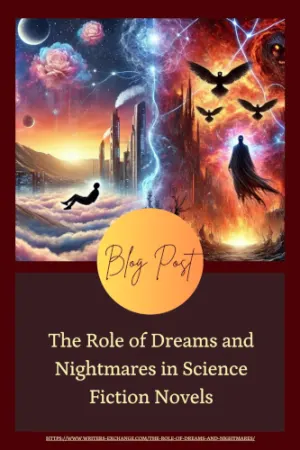 The Role of Dreams and Nightmares in Science Fiction NovelsJanuary 17, 2025Science fiction has long been a genre of boundless creativity, exploring themes...Cowboy Fever Series Anthology by Karen WiesnerMay 28, 2026Cowboy Fever Series Anthology is a compilation of five novellas and a novel in t...Murder of a Madam by David R. AddlemanMay 26, 2026She gave him a family. Someone made sure she'd never see tomorrow.3D Fiction Fundamentals Collection, Book 4: Writing the Overarching Series (or How I Sent a Clumsy Girl into Outer Space) by Karen S. WiesnerApril 29, 2026The guide that covers what other series writing books do not.3D Fiction Fundamentals Collection, Book 3: Writing the Standalone Series by Karen S. WiesnerMarch 5, 2026Your series ideas deserve more than good intentions. Get the blueprint that turn...A Useless Series, Book 3: Useless and the School Fete by Margaret PearceNovember 26, 2025Escape the elves. Free the prisoners. Beat the clock.Mischief in Moonstone Series, Book 7: All She Wore Was a Bow by Christine DeSmetNovember 4, 2025He rolled into town to stop a wedding. He never planned on Mrs. Claus.Bloodmoon Cove Spirits Series, Book 11: Bad Blood by Karen WiesnerOctober 26, 2025Blood will have blood... George Maulson and Chenoa Eponi are some of the last de...A Useless Series, Book 2: Useless and the Carnival of Terror by Margaret PearceSeptember 18, 2025The carnival gates swing open, but no one leaves. When Ewen "Useless" Euston and...The Use of Misdirection in Fantasy FictionMay 31, 2025Exploring Reader Reactions, Writer Strategies, and the Art of the Unexpected &nb...The Importance of Research in Historical Fiction WritingApril 9, 2025Historical fiction bridges the past and the present, offering readers a vivid gl...Uncovering Allegorical Elements in Classic Christian LiteratureMarch 9, 2025What Allegory Actually Does Christian literature has always done something more...The Role of Dreams and Nightmares in Science Fiction NovelsJanuary 17, 2025Science fiction has long been a genre of boundless creativity, exploring themes...
3D Fiction Fundamentals Series covers the A to Z’s of crafting the highest quality fiction including how to:
With step-by-step guidelines, instructions, and tips throughout that are flexible and clearly written, imparting a layman’s ease of understanding and can-do motivation, this collection may be the only writing craft books you’ll ever need. Each volume has a bonus companion booklet available presented in usable digital format or paperback that includes all the aids from the main book that you can use in your own writing–and extras!
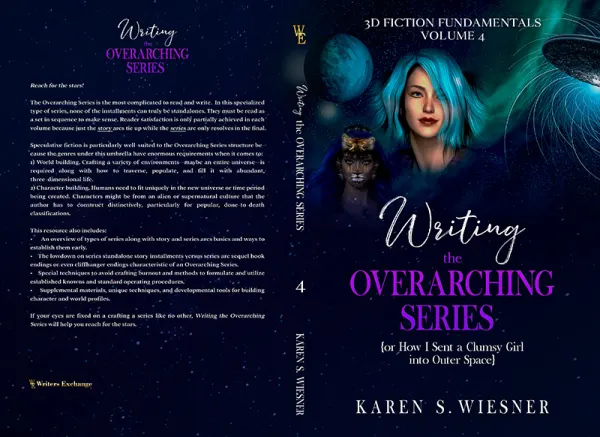
The Overarching Series is the most complicated to read and write. In this specialised type of series, none of the instalments can truly be standalones. They must be read as a set in sequence to make sense. Reader satisfaction is only partially achieved in each volume because just the story arcs tie up while the series arc only resolves in the final.
Speculative fiction is particularly well-suited to the Overarching Series structure because the genres under this umbrella have enormous requirements when it comes to:
1) World building. Crafting a variety of environments--maybe an entire universe--is required along with how to traverse, populate, and fill it with abundant, three-dimensional life.
2) Character building. Humans need to fit uniquely in the new universe or time period being created. Characters might be from an alien or supernatural culture that the author has to construct distinctively, particularly for popular, done-to-death classifications.
This resource also includes:
--An overview of types of series along with story and series arcs basics and ways to establish them early.
--The lowdown on series standalone story instalments versus series arc sequel hook endings or even cliffhanger endings characteristic of an Overarching Series.
--Special techniques to avoid crafting burnout and methods to formulate and utilise established knowns and standard operating procedures.
--Supplemental materials, unique techniques, and developmental tools for building character and world profiles.
If your eyes are fixed on crafting a series like no other, Writing the Overarching Series will help you reach for the stars.
Also Available from these Retailers:






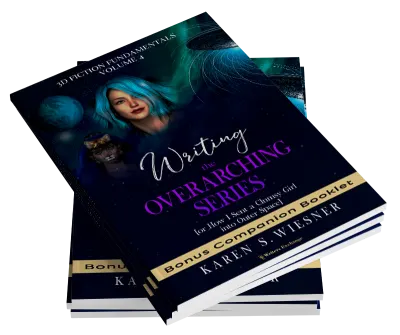 Writing the Overarching Series Bonus Companion Booklet
The blank worksheets from WRITING THE OVERARCHING SERIES by Karen S. Wiesner are provided in a usable digital file that allows users to type right into the document and use it over and over as needed. This bonus booklet also contains in-depth interviews with series authors and publishers.
A print edition is also available for purchase. This bonus booklet also contains detailed exercises and examples.
In Which an Old Dog Learns a New Trick
The inability to let a story go without follow-up or further detail is the hallmark that leads to prequels, sequels, trilogies, and a full series. Author Thomas Helm has said that the test of a good story is dreading to read the last chapter. That goes for the author of the book as well as its fans. You can't get quite the same satisfaction from a standalone book since there's always that sadness at the end because no continuation is in store.
When I wrote my manual Writing the Fiction Series (originally published in 2013 by Writer's Digest Books and now reissued as the third volume in my 3D Fiction Fundamentals Collection under the title Writing the Standalone Series, hereafter to be called by this new name), the crux of my message there was: No matter how you approach writing a series, always treat each book as a single title. I still stand by that motto--at least in theory--because, frankly, if readers don't love the first book, the second and subsequent will never be read. The point of a series is that readers who follow it from one to the next will get a richer, more complex and more emotional experience than those who only read a standalone story or a single book in a series.
I'll confess: When I wrote Writing the Standalone Series, I thought the book was complete with the A to Z's of crafting any series included--and it really does come close. However, it wasn't until I wrote two specific fiction series that I realized something was lacking in my first craft book on writing a series, something that I hadn't covered in that volume. That will be the focus of this particular manual.
Science fiction horror is my favorite genre to read, and I'd always wanted to offer something in that genre. Though I'd written mild horror and, in fact, many speculative fiction titles before, science fiction was new for me. Before I embarked on what felt like an epic quest when I started my romantic sci-fi series, Arrow of Time Chronicles, I'd been a published author for more than 20 years and I was juggling nearly a dozen series. Nevertheless, when I finished Writing the Standalone Series, I didn't have the slightest idea what was in store for me concerning something as complex as the science fiction series turned out to be. This old dog had to learn quite a few new tricks.
Long before I actually had any specific ideas about potential science fiction plotlines, I was talking to my kid and husband about wanting to come up with something like Star Trek where I could have my Clumsy Girl Zoë Rossdale (of Clumsy Girl's Guide to Falling in Love and Clumsy Girl's Guide to Having a Baby) onboard the spaceship. My (at the time), teenager, especially, thought it was brilliant and encouraged me to make it happen.
Fast-forward quite a few years and finally I'm getting ideas for a science fiction series. The premise I started with was a sci-fi saga set not too far in the future when mankind has finally begun traveling the stars, mainly in desperate and dire need of finding new homes for the population stranded on Earth following the Great Catastrophe (basically, Climate Change reaching the critical point). What if Humans built orbital habitations for their people not only in their own planet and moon's LaGrange points (you can do a search for what these are if you need to) but also in the L-points of other planets and moons all over the galaxy? In the course of constructing these space dwellings suitable for Humans, what if one of the moons and planets they build above is in a nuclear winter and there are actually survivors down on the planet below? What if there are others originally from the planet who'd achieved space travel before the war that destroyed their planet and these hostile Napoleonic aliens return to their homeworld to find Humans "squatting" in their territory?
That catalyst is what led me to writing this series, but another thing that compelled me was the idea of having cultures (what I call the alien races populating my series) spread across the galaxy that, genetically, are so similar, it raises a thousand scientific, cosmological, and theological questions.
The horror angle I wanted to develop in this series turned much milder than I intended in the form of phantom energy--an unconscious force of dark energy--dominating and "expanding" like a space-eating tumor throughout the universe. Eventually, its rapid destruction spreads everywhere and threatens all life in the galaxy.
In case you're wondering, yes, my Clumsy Girl Zoë's descendant Astoria ("Tori") made it on board the Aero spaceship, klutzing it up in the most endearing way.
Even before I started writing Arrow of Time Chronicles, I believed science fiction had to be the most complicated genre conceivable. Not only does the author have to create all types of characters, but most of the time they're part of an alien race that hails from a different part of the galaxy altogether. World building becomes universe building. Gulp! And technology...wow, where do I even start? It's no wonder a lot of sci-fi authors are scientists (Isaac Asimov, Arthur C. Clarke, Fred Hoyle) 'cause, frankly, who else can really understand all these things? Intimidations galore!
Of all genres, I think science fiction also has the most opinionated authors and fans. I tease a bit here, but seriously I don't believe in placing too many regulations on any writer, let alone myself. If an author can get something to work in a story, then who cares about some long-standing rule that says no, you cannot do that here? How many other genres are you told from the get-go that, as a writer, you absolutely should not dare to change something that's been as established the cardinal rule? Additionally, you're also told that all your science and tech better be legit...despite that...{clearing throat here} you're writing fiction.
While working on my Arrow of Time Chronicles over about 2 1/2 years, I found out in the process of learning everything I could and in some ways teaching myself how to go about understanding the mechanics of writing in this genre that science fiction was definitely the most complicated genre imaginable. There was so much to absorb, so much to construct, so many ways to go wrong and have it all fall apart.
After I was done writing my sci-fi series, I felt a whole kaleidoscope of emotions about what I'd accomplished: Triumph, relief, awe, sorrow, complete and utter exhaustion. And, my conclusion was, yeah, science fiction is hands-down the most complicated genre there is! There is simply no comparison. Even mysteries, police procedurals, and action-adventures were a walk in the park compared to this genre.
I got a thorough education in the course of writing my sci-fi series. Before I ever started writing it, I read every book I could get my hands on about how to write in this genre. Yet I was left with quite a few curve balls I couldn't have foreseen. I knew I had to overcome these things if I had any hope of succeeding in the execution of what I hoped would become my masterpiece.
Following the completion in 2019, I believed that the tremendous endeavor I'd undertaken was so complicated solely because it was a science fiction series. However, the same year I wrapped up the sci-fi saga, I found myself stumbling unawares into another project, Bridge of Fire, the fifth offering of my Woodcutter's Grim Series. I only realized later that Bridge of Fire was of the same nature as Arrow of Time in that there was an enormous amount of character- and world-building to do and the stories were so interconnected, there was simply no way each title could stand alone. I got to a certain point in outlining Bridge of Fire when I understood all the stories were, in fact, a single story that had to be presented in three parts because it would have been far too long to sell as one unit. In other words, the volumes weren't complete or satisfying without each other, nor could they be read out of order.
So the question was, if the complications in writing Arrow of Time weren't relegated to just the inherently complex nature of the genre since I faced similar uphill climbing with Bridge of Fire, what else could I blame?
The answer to my confusion about what made these particular series so tricky is the focus of this writing reference.
THE PURPOSE OF THIS BOOK
My goal with this manual is to illuminate a specialized type of series I'm calling the Overarching Series, which requires complex and multifaceted character- and world-building as well as necessitating something similar to cliffhanger endings (but not quite as harrowing) in all but the final installment. This type of series is particularly well-suited to speculative fiction more so than any other category of fiction. It is within the realm of possibility that other genres could utilize the series arc sequel hooks that characterize an Overarching Series versus the much more common Standalone Series. That said, the Overarching Series is most prevalent in speculative fiction. However, many or any of the techniques and tools presented in this manual could be used on any series type. If you're specifically working on a Standalone Series, my book Writing the Standalone Series should be invaluable to your progress.
The methods utilized in this manual can be used by writers in any stage of their career, whether unpublished or published with a single work-in-progress or a dozen under their belts. The techniques can also be used in any length of fiction equally well. Although this book assumes you'll be using the methods described throughout for a brand new project, the technique can also be used for projects you've written one or more drafts of that need more work.
This book is broken down into eight chapters followed by the epilogue and an appendix.
Chapter One explores the two types of series that exist, namely Standalone and Overarching. The type we're focusing on in this manual is the Overarching Series and here we'll talk about its connection to speculative fiction.
Chapter Two briefly sums up book groupings that are pertinent to this manual as well as defining the four types of ties writers use when crafting a series.
Chapter Three provides the basics of what story and series arcs are and ways to establish them early in the project, including step-by-step methods for advancing the Overarching Series. The Story and Series Arcs Bullet Point Summary Sheet and Series and Story Premise Prompts forms can be used at any time in a project, but both are best utilized long before the writing begins.
Chapter Four discusses the controversial issue of series standalone story installments versus the series arc sequel hook endings that are almost always necessary--and can be unavoidable--in each volume (other than the final) that makes up an Overarching Series. Pros and cons are discussed along with effective ways to sell a series.
Chapter Five tackles the thorny business of how and why authors should consider deliberately limiting their story potential development while working on an Overarching Series.
Chapter Six covers research burdens specific to writing an Overarching Series utilizing a Resource Catalog Checklist to stay organized on all your series specifics. Additionally, I'll provide developmental tools for constructing deeply comprehensive characters and worlds.
Chapter Seven focuses on techniques writers of an Overarching Series can make good use of to avoid crafting burnout. Here, we'll discuss cardinal rules (and when, where, and why to break them); the need for standard operating procedures as well as creatively employing established knowns; and methods of skillfully grounding readers and revisiting the series and story premises, including a worksheet that should pinpoint exactly what's needed from one series installment to the next.
Chapter Eight focuses on the importance of presentation and the range of options that are available when it comes to writing and publishing a series with very large installments.
The conclusion sums up what we've learned about constructing an Overarching Series.
The appendix holds blank versions of the worksheet and aids you'll need to write your own Overarching Series.
HOW TO USE THIS BOOK
Virginia Woolf said, "As for my next book, I am going to hold myself from writing it till I have it impending in me: grown heavy in my mind like a ripe pear; pendant, gravid, asking to be cut or it will fall." This quote precisely describes how a story or series should grow in the author's mind until it absolutely has to be written. The best case scenario is always, always, always to start a story or a series only after you have a lot of ideas, vivid characters, setting, plots, etc. to work with. The three-dimensional writer starts with a well-formed story that's ready to drop into his hands like ripe fruit. While you can do the same for an idea that's not ready, it'll be a lot harder. In fact, it might take the author decades to get an unripe story or series off the ground. I don't recommend undertaking the writing method described in this book or any other until you have at least one story in a series that's ready to be worked on, so keep that in mind as you get started.
A couple of other notes: Throughout this book, for consistency, I'll refer to characters in the female point of view. To offer distinction, I'll refer to readers and writers in the male POV. Clearly, characters, readers, and writers can be of either sex, but, to prevent an erratic jump from one to the other, I've done it this way.
Some clarifications about the examples from published books I've used in this manual: I rarely feel comfortable fabricating material from published works that aren't my own to fit into sections of my worksheets. Doing so would force me to use only what was found in those texts. In many cases, there may not be much to find since obviously the authors weren't using my worksheets when writing their books. Bottom line, the work's already done, and I can't speculate what might have been done during the writing of someone else's book. Needless to say, it's not easy to "work backwards" when creating examples from another author's stories. It's nowhere near simple to create them using my own either, but it is at least comparatively easier. So that's why most of the examples are from my own work.
One other thing to take notice of is that a number of the examples used throughout this book are from movies or even videogames. The reason for this is because those mediums are so much more visual and also because the debatably sad fact is that there are more movie-goers and gamers than readers these days. Safe to say, the fiction in movies and games may be better known than that in books, although those consulting this reference probably read more books than they do watch movies or play games. Ultimately, all the examples are fictional, so I saw no reason not to use some from each medium.
Additionally, I'll note upfront that I believe a series name is part of its branding (see Writing the Standalone Series). Not only should the series title be included everywhere the name of a book is spoken or written about, but the world "series" or "trilogy" (or whatever book grouping is utilized) should be capitalized in order to further solidify the branding. In other words, I never refer to my series Family Heirlooms as simply that. Always, I refer to it as the "Family Heirlooms Series" because that's the full title and the most effective way to brand it to my readers. That's why you'll see every series mentioned within this book with the word "series" (etc.) capitalized.
One final note of clarification: Keep in mind that you don't have to perform every single step in this or any other writing method. Authors are all different, we all think and perform differently, and ultimately it makes no sense to do more work than you need to. The goal for each writer should be to find what works for you personally, as an individual. Most of the time that means finding what doesn't work first. My motto is, use what works for you; discard the rest. The point of sketches, worksheets, and checklists is to give help in pinpointing problem areas. If you're not having a problem in a certain area, go ahead and skip the in-depth processing. In my writing methods, in particular, my goal is to make sure authors have everything needed to learn to write instinctively. What I mean by that is that through copious amounts of practice, usually over the course of several years, your brain begins to grasp fiction crafting basics and can even master them. This means you can do a lot less pre-writing before you write anything. After having 150 books published, I write instinctively, so much of my crafting is done without the need to fill out any worksheets or other aids while outlining. If you don't feel like some or any of this is instinctive for you, go through the steps as I've set them down. Every author's endgame is and should be instinctive writing.
GETTING STARTED
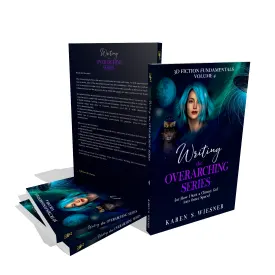
If you find yourself endeavoring to create your very own Overarching Series, Writing the Overarching Series {or How I Sent a Clumsy Girl into Outer Space} should give you a solid plan of action from start to finish through in-depth discussions, examples and exercises, with leave-no-stone-unturned aids, and, as always, a three-dimensional layering process that will allow you to reach for the stars.
Say goodbye to writing and rewriting with no results. First Draft Outline provides you with a sure-fire system to reduce time-intensive rewrites and avoid writing detours, allowing you to create an ou…
Read More →
Without layering, a story is one-dimensional, unbelievable, boring. Set within the framework of comparing the process of building a house to the process of building a story, Cohesive Story Building gi…
Read More →
Writing the Standalone Series covers all things that need to be taken into consideration when writing a series and provides a one-stop resource. This guide gives writers everything they need for devel…
Read More →
Three-Dimensional Fiction Writing will help writers master the three-dimensional aspects of characters, plots, and settings using detailed sketches that define the past, present, and future aspects of…
Read More →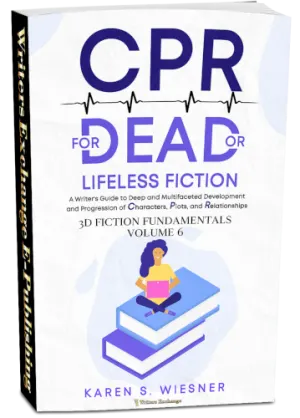
The three core elements of any story--Characters, Plots, and Relationships (CPR)--need to be developed three dimensionally. This resource teaches writers how to identify dead or lifeless characters, p…
Read More →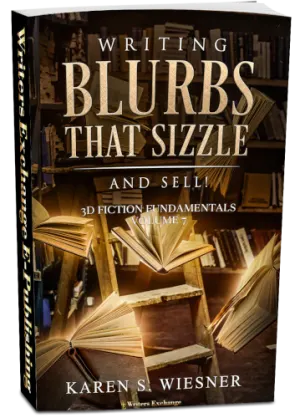
Crafting an effectively good back cover blurb is no easy task. A blurb needs to convince readers they have to read the story inside the pages...or they'll set the book down without ever opening it. Ad…
Read More →Bought this book from us? Write a review from your account page — it appears here once approved.