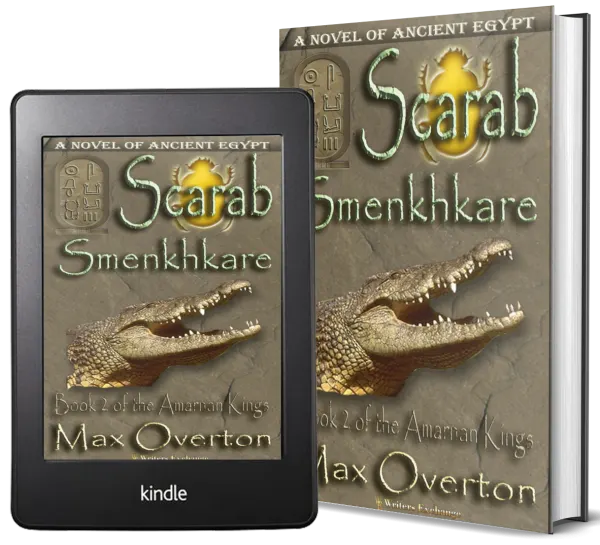
Scarab-Smenkhkare
Book 2He rose from the ashes of betrayal--but her voice was the flame that lit his path.
Read More →





 Cowboy Fever Series Anthology by Karen WiesnerMay 28, 2026Cowboy Fever Series Anthology is a compilation of five novellas and a novel in t...
 Murder of a Madam by David R. AddlemanMay 26, 2026She gave him a family. Someone made sure she'd never see tomorrow.
 3D Fiction Fundamentals Collection, Book 4: Writing the Overarching Series (or How I Sent a Clumsy Girl into Outer Space) by Karen S. WiesnerApril 29, 2026The guide that covers what other series writing books do not.
 3D Fiction Fundamentals Collection, Book 3: Writing the Standalone Series by Karen S. WiesnerMarch 5, 2026Your series ideas deserve more than good intentions. Get the blueprint that turn...
 A Useless Series, Book 3: Useless and the School Fete by Margaret PearceNovember 26, 2025Escape the elves. Free the prisoners. Beat the clock.
 Mischief in Moonstone Series, Book 7: All She Wore Was a Bow by Christine DeSmetNovember 4, 2025He rolled into town to stop a wedding. He never planned on Mrs. Claus.
 Bloodmoon Cove Spirits Series, Book 11: Bad Blood by Karen WiesnerOctober 26, 2025Blood will have blood... George Maulson and Chenoa Eponi are some of the last de...
 A Useless Series, Book 2: Useless and the Carnival of Terror by Margaret PearceSeptember 18, 2025The carnival gates swing open, but no one leaves. When Ewen "Useless" Euston and...
 The Use of Misdirection in Fantasy FictionMay 31, 2025Exploring Reader Reactions, Writer Strategies, and the Art of the Unexpected &nb...
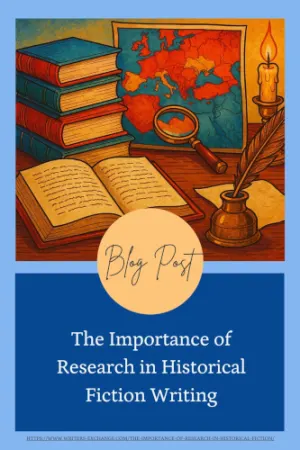 The Importance of Research in Historical Fiction WritingApril 9, 2025Historical fiction bridges the past and the present, offering readers a vivid gl...
 Uncovering Allegorical Elements in Classic Christian LiteratureMarch 9, 2025What Allegory Actually Does Christian literature has always done something more...
 The Role of Dreams and Nightmares in Science Fiction NovelsJanuary 17, 2025Science fiction has long been a genre of boundless creativity, exploring themes...Cowboy Fever Series Anthology by Karen WiesnerMay 28, 2026Cowboy Fever Series Anthology is a compilation of five novellas and a novel in t...Murder of a Madam by David R. AddlemanMay 26, 2026She gave him a family. Someone made sure she'd never see tomorrow.3D Fiction Fundamentals Collection, Book 4: Writing the Overarching Series (or How I Sent a Clumsy Girl into Outer Space) by Karen S. WiesnerApril 29, 2026The guide that covers what other series writing books do not.3D Fiction Fundamentals Collection, Book 3: Writing the Standalone Series by Karen S. WiesnerMarch 5, 2026Your series ideas deserve more than good intentions. Get the blueprint that turn...A Useless Series, Book 3: Useless and the School Fete by Margaret PearceNovember 26, 2025Escape the elves. Free the prisoners. Beat the clock.Mischief in Moonstone Series, Book 7: All She Wore Was a Bow by Christine DeSmetNovember 4, 2025He rolled into town to stop a wedding. He never planned on Mrs. Claus.Bloodmoon Cove Spirits Series, Book 11: Bad Blood by Karen WiesnerOctober 26, 2025Blood will have blood... George Maulson and Chenoa Eponi are some of the last de...A Useless Series, Book 2: Useless and the Carnival of Terror by Margaret PearceSeptember 18, 2025The carnival gates swing open, but no one leaves. When Ewen "Useless" Euston and...The Use of Misdirection in Fantasy FictionMay 31, 2025Exploring Reader Reactions, Writer Strategies, and the Art of the Unexpected &nb...The Importance of Research in Historical Fiction WritingApril 9, 2025Historical fiction bridges the past and the present, offering readers a vivid gl...Uncovering Allegorical Elements in Classic Christian LiteratureMarch 9, 2025What Allegory Actually Does Christian literature has always done something more...The Role of Dreams and Nightmares in Science Fiction NovelsJanuary 17, 2025Science fiction has long been a genre of boundless creativity, exploring themes...
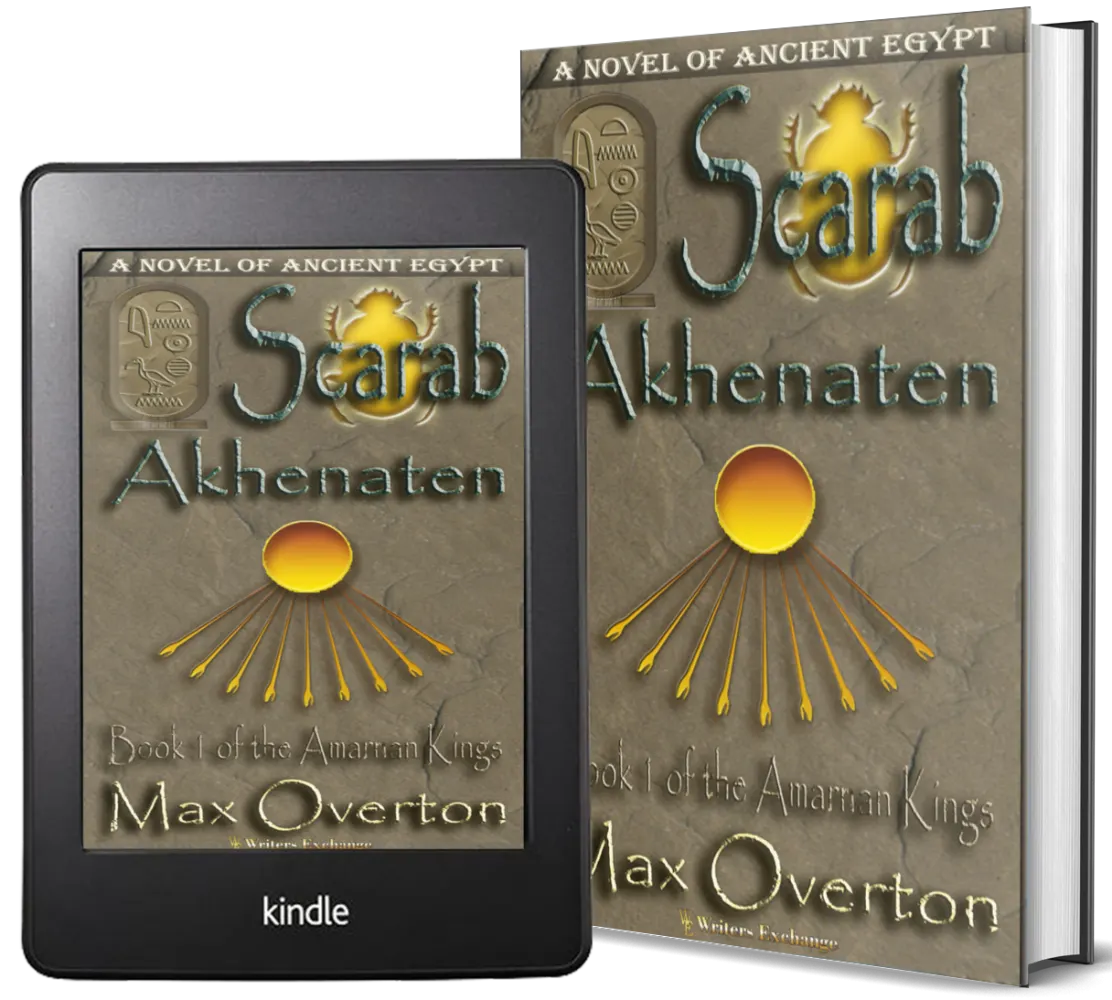
A forgotten princess. A forbidden truth. A story that rewrites history.
When British archaeologists uncover a sealed chamber deep within a Syrian cliffside, they expect Neanderthal remains. What they find instead is the unthinkable: an Egyptian tomb--and a written account from Beketaten, sister to the heretic king Akhenaten and the boy pharaoh Tutankhamen.
Through vivid hieroglyphs, Beketaten--called Scarab--recounts her extraordinary life amid the splintering of Egypt's old religion. From royal courts steeped in ceremony to desert camps brimming with rebellion, she bears witness to Akhenaten's radical rule, his queen Nefertiti's rise, and the creation of the City of Aten. Yet even as the gods of Egypt fall silent, Scarab dares to love a soldier whose loyalty is torn between crown and truth.
As religious upheaval rocks the land, Scarab must choose between obedience and survival--between family and faith. And her story, buried for over three thousand years, will shake the modern world.
An immersive historical journey blending archaeological mystery with ancient drama, perfect for readers of Michelle Moran and Christian Jacq.
Also Available from these Retailers:







I have sat on the throne of The Two Lands, Ta Mehu and Ta Shemau; Kemet and Deshret; known too as the Land of the Nine Bows and to people of the nations as the Nation; the sacred seat whence all power derives in that ancient land. It is the throne of the Great House Per-Aa, that name transferred to the king who is called Great One; God-on-Earth, beloved of Re, bringer of life and death, shepherd to the people.
They say that the experience changes a man forever. I would not know, for two reasons: First, I cannot remember a time before I sat on the throne, coming to it in the belly of my mother. And second, I am a woman.
I was born in the thirty-first year of the reign of Nebmaetre Amenhotep, Lord of the Two Lands. I am his youngest daughter, begotten on the body of his beloved wife and queen Tiye, yet he never knew me or received me into his holy presence. I was born six months after the gods struck my father down with an affliction that erased his memories and crippled his body. For eight years he remained thus until the gods called my father to take his place among them in the underworld.
The kings of Kemet are given five names. Secret names, familiar names, names by which they are known to those they rule and by which the nations of the world know them. My father Amenhotep was known by that name only to his family; it was a personal name, bestowed on him at birth by a proud father. In truth, he was the Living Heru, Strong Bull Appearing in Truth; establishing Laws and Pacifying; Golden Heru, Great of Valor, Smiting the Asiatics; King of Ta Shemau and Ta Mehu, Nebmaetre; Son of Re, Amenhotep, Ruler of the city of Waset in the sepat of Waset, in our beloved Ta Shemau.
Women are only given one name, for though women are accorded equality within the Two Lands, unlike other nations, women themselves are regarded as ornaments. A woman may own property, divorce her husband, marry whom she chooses, and bring suit against a man in the law courts. A queen may hold great power within the land, may rule over a great household and, in the absence of the king, may even issue commands; yet she is regarded as a lesser being by her husband. How much less is a girl-child worth, one born without a father?
A royal boy, particularly an heir, is named by his father on the day of his birth, and on the next holy day receives a secret name known only to the gods and their high priest. Later, a king receives coronation names by which he is known to the nations. My father Amenhotep had the coronation name Nebmaetre, and my brother, also Amenhotep--at least as he was at the start--was known as Neferkheperure Waenre.
A girl also receives a name from her father, though this may be the only one she receives until she flowers into womanhood. Then, if she displays some great beauty, she may be called by a more descriptive name.
I, on the other hand, though a royal princess, had no father present on my birth date to give me a chosen name. No one gave me a name and, though my mother, Queen Tiye, told me later that my name was to have been Beketamen, the handmaiden of Amun, I was never called that. Later, when my brother became king, I received first a nickname, then a proper name at his hands. For a few years I was called simply No-Name. It was as well that I did not realize at the time in what peril I was, having no name. If I had died, my spirit would have ceased to exist, the gods would have turned from me. Later, though, I acquired other names--nicknames, names of endearment from family and lovers, names of awe from the common people, and names of hatred from my enemies.
Yes, I have enemies. One does not enter the royal house; become a member of the nobility, live intimately with kings and princes without making enemies. Just as my position is high within the Great House, so are my enemies among the highest and most powerful. I have fought against three kings, two of whom were members of my own family. They are dead now these many years and I have lived to see another family raised to the Great House, though few within it realize they are tied to my family by bonds of blood.
The Great House of Kemet is ancient. The scribes and priests maintain there has been a king in Kemet time out of mind, stretching thousands of years back to when Menes, the first God-on-earth unified and ruled this blessed land. That is not to say that my father was a direct earthly descendant of the first king. Many families have embraced the godhead, for the gods themselves desire strength on the throne of Kemet. Even the strongest and most virile young man will fade, passing by degrees into maturity and feeble old age. So it is with families too. A dynasty of kings will arise, full of power and strength, ruling Kemet with an iron hand for a time. Then as the generations pass, the strength leaves--dissipates--until the kings presiding over the decline of the family fade into obscurity and the gods raise a new family from the ashes of the old.
Our family has been a strong one, possibly one of the strongest. My great-grandfather Tuthmosis, the third of that name, was a great conqueror, making his name, and Kemet's, feared amongst the nations. My father, too, has been a great king, though one devoted to building and beauty rather than to the destructions of war. Yet he was the last of the great kings of our family. For a time I believed my brother/nephew Smenkhkare would achieve fame but he had too many enemies.
Smenkhkare--ah, Smenkhkare--best of men. There was a man destined to become a great king but for the evil of his Tjaty. A son of my father's later years, Smenkhkare was not in the direct line of succession, yet he was raised to the throne by fate and the strong hand of his uncle. My father begat him on his daughter, my elder sister Sitamen, three years before my own birth. It may seem strange and unnatural to those of lesser nations that a man should have a child on his own daughter, yet in the Great House it is not uncommon.
Every king seeks an heir of his body, and more, as the future is known only to the gods. Yet too many sons and the peace of a household may be disturbed through unseemly rivalry. So, too, with daughters. It is unthinkable that a royal daughter of Kemet should be married off to some foreign prince, but if not a prince of the nations, who is she to marry? Many nobles of the Two Lands would be only too pleased to link their houses with the king's by marrying off a son to the king's daughter; but in that way, too, lies discord. Many an act of violence has been spawned by overweening ambition. Far better the king should marry his sister and his daughter and keep the strength of the Great House within the family. The gods themselves spend their seed only amongst sisters, mothers, daughters, being jealous of their power. Why should not the king, Lord of the Two Lands and God-on-Earth, do likewise?
My father Nebmaetre Amenhotep married a commoner, Tiye, daughter of the king's Master of Horse, Yuya, and by all accounts loved her deeply. He had other wives of course; no king would be respected unless he had a herd of wives to be serviced by the Great Bull of Heru; yet was my mother, Tiye, always his favorite. They had seven children together - two sons: Tuthmosis and Amenhotep, family names that reflect the strength and antiquity of our line; and five daughters: Sitamen, Iset, Henuttaneb, Nebetiah and me.
Tuthmosis was the eldest, crown prince and heir, beloved of my father. Strong of limb, bronzed and athletic, with a quick and sharp mind, he embodied all that was good and great in my family. People talked of him as a re-embodiment of his illustrious namesake great-grandfather and looked for mighty deeds when he ascended the throne. He became a priest of Ptah in the city of Ineb Hedj--first heir to the throne ever to be elevated to this position--but fell ill and died of the plague four years before my birth. His brother Amenhotep was raised up in his place. Being the only surviving son, my father raised him to the throne, making him a co-regent. However, as he had neither the inclination, nor the heart for kingship, the younger Amenhotep, now styled Neferkheperure Waenre, returned to Zarw where he ruled, with his advisors, over the Delta lands.
Amenhotep was everything Tuthmosis was not. A sickly child, he pursued activities more in keeping with a scribe's son rather than the son of a king. Poetry was his passion, never statecraft. He was raised in my mother's city of Zarw, far downriver from Waset, surrounded by our mother's kinsmen. Yuya, our grandfather was a foreigner, a learned man of the tribe of Khabiru from the north. I believe it was from these people that my brother learned his strange ideas.
By puberty, it became apparent that the gods had not blessed Amenhotep with the strength that a king of the Land of the Nine Bows needs. He developed strangely, his swollen hips and thighs hinting at a female's sex rather than a male's. His head was oddly elongate and his face long. If he had not been the king's son, it was whispered that he might have been put away. However, he was an acknowledged son of the king's body and while hardly likely to succeed to the throne, he was cherished, though far from the king's side. It was whispered, too, that my brother Amenhotep was not the natural son of his father the king, but instead came from the loins of another man, a Khabiru, in the Zarw household of my mother. These whispers, however, were started by a man who had everything to gain from blackening the names of my family, and I put no credence in them.
My father, as I have already said, was not a great warrior. He successfully waged war against the Nubians but put more store on diplomacy. His constant negotiations led to many foreign marriages as he tied the kings of surrounding lands to Kemet's skirts. One such diplomatic wife, Ghilukhepa, daughter of Shuttarna, King of Mitanni, came to my father's bed in the tenth year of his reign. Yet even this sloe-eyed, raven-haired beauty could not distract my father long. He sired a child on her, then duty done, hastened back to my mother's side.
His eldest daughter Sitamen, my sister, married her father in his twenty-sixth regnal year, in a year of Jubilee. The jubilee was held early for a reason that is not remembered, perhaps just on the whim of the king. It would normally have been held in the king's thirtieth year. At the first great Heb-Sed festival of his reign, where Nebmaetre Amenhotep went through a ritual re-enactment of his coronation, anointed with the white crown of the South and the red crown of the North, he proved his strength by running, in full regalia, around the great chariot stadium four times with the Apis bull beside him. Later, in the royal palace, he proved his continued virility by taking Sitamen as Great Royal Wife. He lay with her, even though by custom it was not required, and later that year rejoiced in the birth of his son Smenkhkare.
He married his other daughter Iset four years later, after another Heb-Sed festival, making her, too, a Great Royal Wife. But he did not lay with Iset, as that very evening, while celebrating the marriage feast, my father was struck down by the god Set, ever the enemy of the Living Heru.
Heqareshu, overseer of the nurses, told me later that as Amenhotep stood in the great hall, his beautiful young bride on his arm, accepting the plaudits of the assembled nobility, he staggered and put a hand up to his head before collapsing. He remained asleep, unable to be aroused, for a night and a day, but when he at last awoke, it was as if the king had been replaced by a clay figure of a man. His muscles would not obey him; the left side of his face sagged and ran like a beeswax candle left out in the sun, and his voice, once so deep and powerful, was now slurred and unintelligible.
My mother, the queen, stepped in when it became apparent this malady would last, and for half a year managed the kingdom alone until their son Neferkheperure Waenre Amenhotep could be summoned from distant Zarw, anointed by the priests of Amun and crowned as full regent in Waset. This was as close as I ever came to the throne myself, being in the belly of my mother, except for--but I am getting ahead of myself...
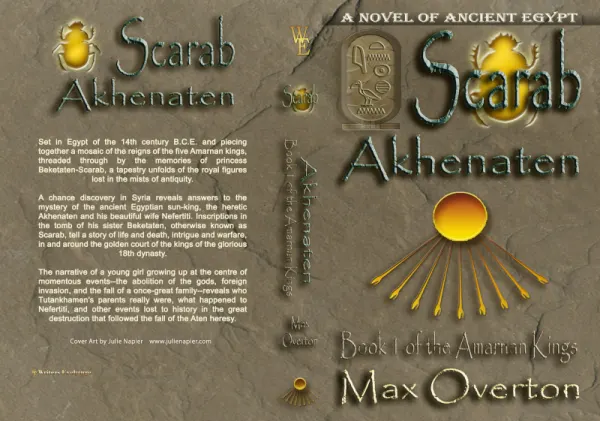
He rose from the ashes of betrayal--but her voice was the flame that lit his path.
Read More →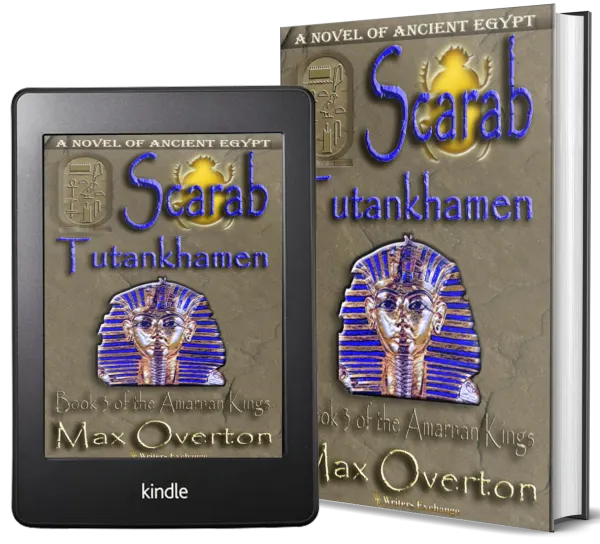
Two brothers. One throne. And a sister caught in the crossfire of history.
Read More →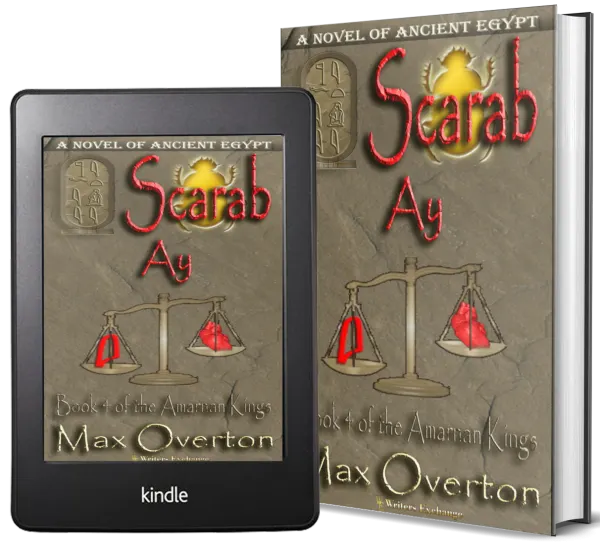
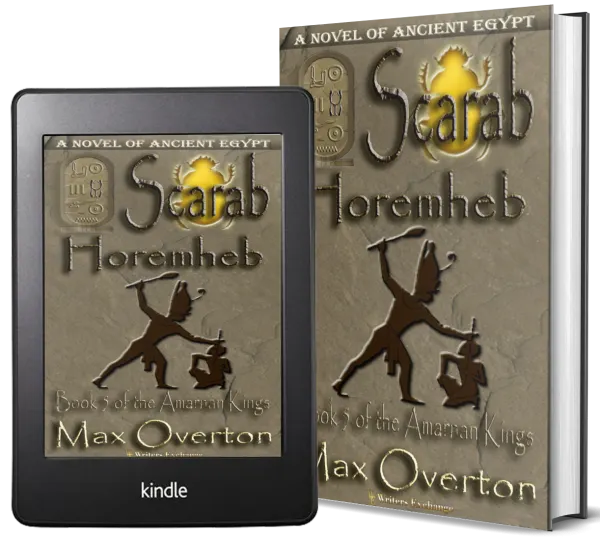
He rose from war. She rose from silence. And the gods were watching them both.
Read More →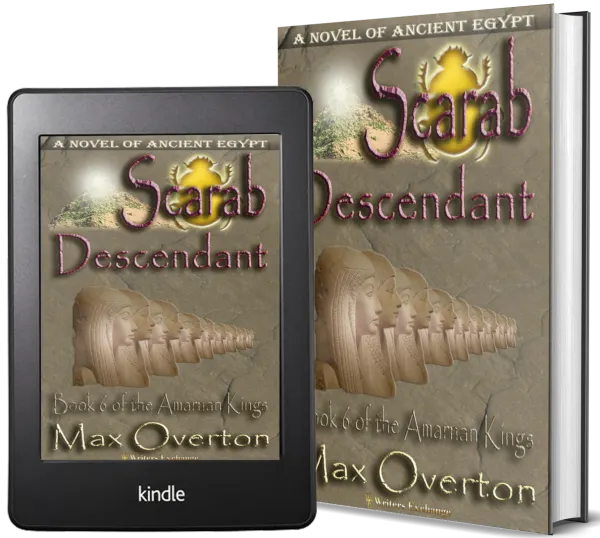
She built the tomb. He sealed the truth. But the gods left the door ajar.
Read More →Bought this book from us? Write a review from your account page — it appears here once approved.