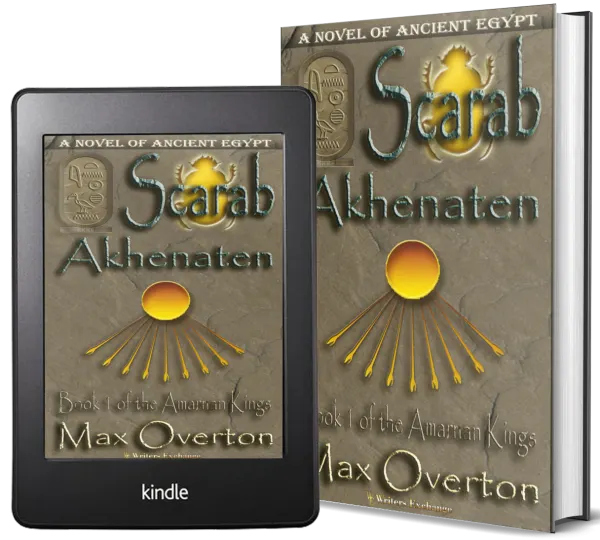
Scarab-Akhenaten
Book 1She was born in the shadow of gods--but dared to speak with her own voice.
Read More →





 Cowboy Fever Series Anthology by Karen WiesnerMay 28, 2026Cowboy Fever Series Anthology is a compilation of five novellas and a novel in t...
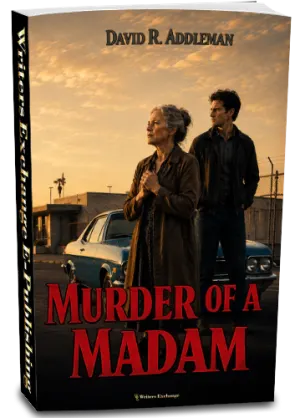 Murder of a Madam by David R. AddlemanMay 26, 2026She gave him a family. Someone made sure she'd never see tomorrow.
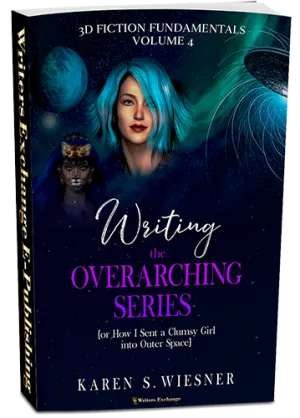 3D Fiction Fundamentals Collection, Book 4: Writing the Overarching Series (or How I Sent a Clumsy Girl into Outer Space) by Karen S. WiesnerApril 29, 2026The guide that covers what other series writing books do not.
 3D Fiction Fundamentals Collection, Book 3: Writing the Standalone Series by Karen S. WiesnerMarch 5, 2026Your series ideas deserve more than good intentions. Get the blueprint that turn...
 A Useless Series, Book 3: Useless and the School Fete by Margaret PearceNovember 26, 2025Escape the elves. Free the prisoners. Beat the clock.
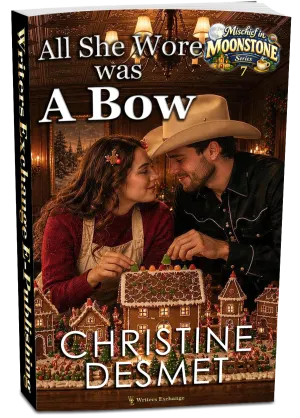 Mischief in Moonstone Series, Book 7: All She Wore Was a Bow by Christine DeSmetNovember 4, 2025He rolled into town to stop a wedding. He never planned on Mrs. Claus.
 Bloodmoon Cove Spirits Series, Book 11: Bad Blood by Karen WiesnerOctober 26, 2025Blood will have blood... George Maulson and Chenoa Eponi are some of the last de...
 A Useless Series, Book 2: Useless and the Carnival of Terror by Margaret PearceSeptember 18, 2025The carnival gates swing open, but no one leaves. When Ewen "Useless" Euston and...
 The Use of Misdirection in Fantasy FictionMay 31, 2025Exploring Reader Reactions, Writer Strategies, and the Art of the Unexpected &nb...
 The Importance of Research in Historical Fiction WritingApril 9, 2025Historical fiction bridges the past and the present, offering readers a vivid gl...
 Uncovering Allegorical Elements in Classic Christian LiteratureMarch 9, 2025What Allegory Actually Does Christian literature has always done something more...
 The Role of Dreams and Nightmares in Science Fiction NovelsJanuary 17, 2025Science fiction has long been a genre of boundless creativity, exploring themes...Cowboy Fever Series Anthology by Karen WiesnerMay 28, 2026Cowboy Fever Series Anthology is a compilation of five novellas and a novel in t...Murder of a Madam by David R. AddlemanMay 26, 2026She gave him a family. Someone made sure she'd never see tomorrow.3D Fiction Fundamentals Collection, Book 4: Writing the Overarching Series (or How I Sent a Clumsy Girl into Outer Space) by Karen S. WiesnerApril 29, 2026The guide that covers what other series writing books do not.3D Fiction Fundamentals Collection, Book 3: Writing the Standalone Series by Karen S. WiesnerMarch 5, 2026Your series ideas deserve more than good intentions. Get the blueprint that turn...A Useless Series, Book 3: Useless and the School Fete by Margaret PearceNovember 26, 2025Escape the elves. Free the prisoners. Beat the clock.Mischief in Moonstone Series, Book 7: All She Wore Was a Bow by Christine DeSmetNovember 4, 2025He rolled into town to stop a wedding. He never planned on Mrs. Claus.Bloodmoon Cove Spirits Series, Book 11: Bad Blood by Karen WiesnerOctober 26, 2025Blood will have blood... George Maulson and Chenoa Eponi are some of the last de...A Useless Series, Book 2: Useless and the Carnival of Terror by Margaret PearceSeptember 18, 2025The carnival gates swing open, but no one leaves. When Ewen "Useless" Euston and...The Use of Misdirection in Fantasy FictionMay 31, 2025Exploring Reader Reactions, Writer Strategies, and the Art of the Unexpected &nb...The Importance of Research in Historical Fiction WritingApril 9, 2025Historical fiction bridges the past and the present, offering readers a vivid gl...Uncovering Allegorical Elements in Classic Christian LiteratureMarch 9, 2025What Allegory Actually Does Christian literature has always done something more...The Role of Dreams and Nightmares in Science Fiction NovelsJanuary 17, 2025Science fiction has long been a genre of boundless creativity, exploring themes...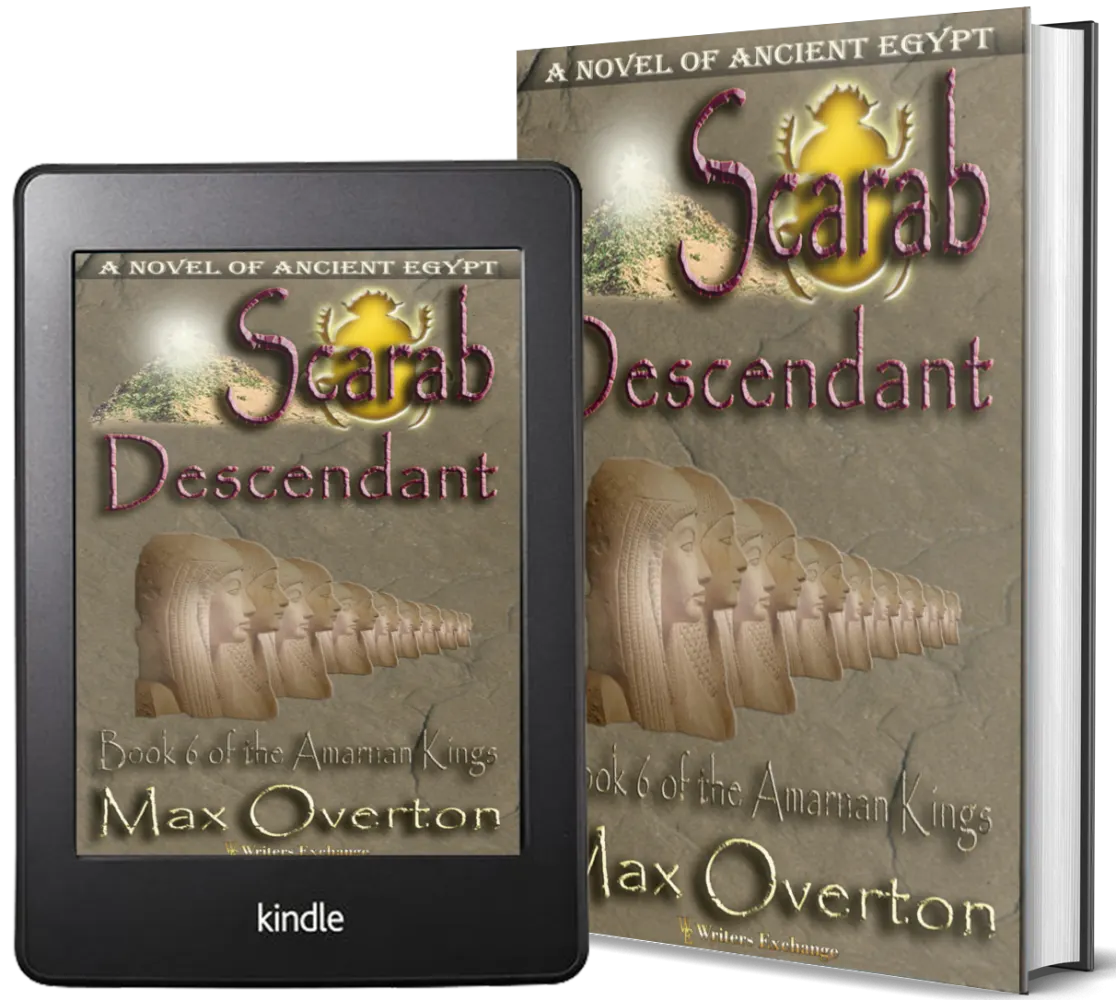
An archaeologist. A buried chamber. A voice that refuses to be forgotten.
The tombs were real. The writings were ancient. But the final secret lay hidden--in a chamber no one expected, and a legacy no one believed.
Decades after Scarab's final words were etched in stone, the last clues point to a forgotten mountain in the Egyptian desert. As a Syrian dig descends into danger, archaeologist Danielle Hanser finds herself at the heart of a discovery that bridges past and present.
Scarab's descendant now holds the truth. And history--if it listens--will never be the same.
A haunting, genre-blending finale that fuses modern-day archaeological suspense with the timeless voice of a forgotten queen.
Also Available from these Retailers:







Death is not what I thought it would be.
The priests tell us that when we die we immediately face the judgment of the gods and our heart is weighed in the balance against the feather of Truth to determine whether our bad deeds outweigh the pure nothingness of good action. Should a heart weigh more than the feather, then the soul is eaten by monsters and we cease to exist. Pass this test, however, and our soul journeys on to pleasant well-watered fields where wheat and barley grow in abundance, where the cattle are fat and vines groan under the weight of their produce. There we exist in happiness for eternity or until such time as the gods choose to pass us back into the world.
The truth is very different--or at least it is in my case.
I travelled down from the fields of Kadesh by the sandstone cliffs to the narrow black lands of Kemet, bringing with me the prepared body of the king Neferkheperu Scarab, my beloved wife. That journey, in itself, could not be told simply so I will refrain. Suffice it to say that the passage through hostile lands was difficult and fraught with dangers both for me and my precious cargo. I was no longer a young man when I essayed it, and I could not move swiftly or fight off bandits by the strength of my right arm as once I might have. I had to employ deceit, guile and subterfuge and in this, the gods aided me.
When the days of embalming had passed, performed by other refugees from the hand of Horemheb and his successors, I faced up to the problem of conveying the body of my king-wife to her final resting place and there entombing her with due ceremony and the riches that are her throne-right. I knew it would not be easy. The rule of Kemetu law as enforced by King Usermaatre-setepenre Ramesses is shaky at best in this northern region where the Empire of Hattu threatens. I could not rely on the Kemetu legions to protect me, even carrying the body of the king's grandmother, for if the authorities learned of her identity the best she could hope for was a small rock-tomb in the Lesser Valley where female relatives of the king are interred. On the other hand, I risked the destruction of her body and soul should bandits claim her richly-wrapped corpse.
There are two ways to enter Kemet--by sea and by land. Any of the sea-ports would have ships plying their trade along the coast and down to the mouths of the Great River, but the entrances to these ports are watched closely by the soldiers of whichever king holds suzerainty in that stretch of the coast. The watch is kept not so much to prevent crime, but rather to prevent any expensive goods being traded without the payment of the requisite taxes. I could not risk my belongings being thoroughly searched by soldiers as I entered the port, so I opted for the slower land route into Kemet, bypassing the cities.
An embalmed body is light, all water and fat having been absorbed by the natron bath, and even after the body was wrapped in finest linen and all the proper prayers and amulets fixed in place, I could carry my beloved in death far easier than I could carry her in life. I had a lightweight casket made, seemingly of raw and uncut timber, unprepossessing and ordinary, but it held the body safely and would attract little attention unless examined closely. This casket I loaded onto a camel and packed it about with cheap trade goods. I could not carry gold with me, for I posed as a poor trader, but I would need it when I arrived in Kemet. I meant to inter my wife as a true king of Kemet and that involved many costly items being prepared. I could not carry gold with me, but I knew where I could find it in abundance--the treasury of her long-dead brother Djeserkheperu Smenkhkare.
I traversed the land of Kanaan without major incident, though three attacks by bandits stripped me of almost everything I owned. Luckily, they left me my bulky and almost worthless bundle of timber. I passed the line of forts--now once more firmly in Kemetu hands--and made my way through the rich delta lands to the white-walled city of Ineb Hedj, or Men-nefer 'the enduring and beautiful' as many men now call the city, and the great stone pyramids looming like angular mountains on the plateau beyond. Here I found the first friends who would help me--for Scarab's sake.
I was welcomed--no questions asked--and given sustenance and such help as I needed to further my quest. I made a quick visit to Iunu, where I spoke to the High Priest of Atum, and then back to Men-nefer where I made my preparations. Now that I was within the borders of Kemet, I could travel the King's Roads in safety, and presently attached myself to a caravan heading south to Waset. I left it in Akhet-Aten though, as I had business there.
Several craftsmen and artisans friendly to the Aten belief had fled the enmity of the kings from Ay to Ramses, and some had found haven in the north. They had family still residing in and about the former City of the Aten, and it were these men I sought. I visited the house of Mut after nightfall, identifying myself when he stared without recognition at my ancient visage.
"Khu, by the holy face of the Aten, what are you doing here? Is...is she with you?"
I told him, and after he indulged in sincere expressions of grief, I revealed why I had come. "Mut, I must bury her as befits her station as king of Kemet and sister, daughter and mother of kings. Will you help me?"
"Tell me what I must do."
"I need a sarcophagus suitable for royalty, and moveable cypress panels painted with scenes from her life and appropriate prayers, and also worthy grave goods."
Mut looked worried. "Whatever wealth I have is hers, you know that Khu, but what you ask will cost far more gold than I have."
"I will provide the gold. All I ask of you is your skill and your silence."
"You have it, my friend."
I left Scarab's body in his care and took a boat upriver the next day. At Waset, I sought out a fisherman I knew, old and discreet, who took me further upriver to where a tumbled cairn and a grove of date palms pointed the way to the hidden treasury of King Smenkhkare. I prayed to the king, and to his sister, that no harm would come to me, before breaking the hidden seals and entering the chamber. Light from the torch I carried reflected back off stacked ingots of gold, mounds of ivory, and burst bags of jewels and finely wrought jewellery. I had calculated how much I would need for Scarab's burial and removed just that much, leaving the rest against future need. Later, I would transfer the rest to the tomb that would hold brother and sister for eternity.
By the time I returned to Akhet-Aten, Mut and his trusted friends had made a start on fashioning the sarcophagus and grave goods. The gold, ivory and jewels I brought enabled them to start turning superlative wooden carvings into works of art, and a month later, all was in readiness.
"They are perfect, Mut," I said. I walked around the room, examining the cunningly wrought sarcophagus, the intricately carved and painted panels and the wide selection of grave goods. "May Aten bless you for your efforts."
"Two things concern me, Khu. First, how are you going to transport all this upriver without raising suspicion? Second, if this is to be a royal burial, you need the sanction of the priests. How will you get a priest to conduct the funeral without informing the king?"
"I will need you to make an outer coffin, plain and painted. Then I will take everything upriver quite openly as the body of a minor noble being returned to his family estates near Behdet. As for the priests--I have made arrangements."
"The tomb is near Behdet then?"
"Better you do not know, old friend. What you do not know cannot be passed on, even accidentally."
I sailed again, this time on a cargo boat heading south on Iteru. Soldiers came aboard at Waset and gave the cargo a cursory examination. The officer in charge asked me about the coffin and panels I carried and with a silent prayer to the gods I offered up my explanation.
"The panels and grave goods are of excellent quality," the officer commented, "But the coffin is hardly up to the same standard. Why is that?"
"The furniture was prepared in Men-nefer while the body of the young master lay in the House of Death. I had a fine coffin prepared, but on the day we sailed, the fools carrying it to the boat dropped it and it cracked. This was all they had as a replacement. I will have to have a new one made in Behdet."
"We have some excellent coffin makers in Waset. Why not have one made here?"
"I have my orders, sir. We are already a day late, and I have a hard master."
The officer nodded sympathetically and let me go. We sailed on to Behdet, where everything was unloaded and stored in a small warehouse near the docks. That night, my fisherman friend returned with his sons and we took everything downriver to the track that led to where a pylon sat atop the line of the western cliffs and an arrow of light pointed inland at dawn. A cart was waiting, driven by another son of the fisherman, and by the break of day, everything sat at the bottom of the cliff face up which we must climb. The tomb of King Smenkhkare lay in the desert beyond the cliffs, in the green mountain crowned by light.
I dismissed the fisherman and his sons with thanks and a little gold, not because they were untrustworthy but because the fewer people who knew the exact location of the tomb, the better. Others would help me complete my mission, but I would have to wait for them, so I hid everything as best I could and made camp.
My helpers arrived the next day--priests and priestesses of the Nine of Iunu. They helped me carry the wooden sarcophagus of King Scarab up the steep and narrow track to the cliff top, past Khepri's shrine, across the miles to the mountain, open the tomb of King Smenkhkare, and install the grave goods. These included the remaining wealth of King Smenkhkare's treasury, laboriously transported piece by piece amid great secrecy. The Hem-Netjer of Atum led the ceremonies of opening the mouth, of blessing the tomb and uttering the incantations of protection, before each of the priests and priestesses uttered words of praise for the King that had put the Nine before all others.
We sealed the tomb and made our way back down to the river. The priests and priestesses bade me farewell before the Hem-Netjer of Atum took me aside.
"The golden scarab that the god gave to her--you have it?" He held out his hand.
"No. It did not seem right to take it. I left it entombed up in Kanaan where Scarab wrote the account of her life."
The Hem-Netjer frowned. "That was ill-considered. With it, I could have conjured a lasting protection on the tomb."
"I will stay and guard it," I said. "I meant to stay here anyway, for my life's meaning lies up there." I gestured toward the hidden tomb that lay beyond the cliff face.
The Hem-Netjer prayed and inclined his head as if listening to unspoken words. He nodded. "The gods will accept your sacrifice, Khu son of Pa-it, beloved of Scarab. Guard her well until she comes again."
"She will come again? What do you mean?"
He did not answer me, but stepped aboard the boat that would carry them back down the river to Iunu. I put the words from my mind, for I reasoned that if she came again I would know it and if she did not, then his words were meaningless.
I lived there below the cliff face and path that led to my beloved's tomb for nearly twenty years more. I built myself a shelter and grew a little food, catching fish and snaring wildfowl in the reeds. People from villages nearby came to recognise me as a holy man and brought me what I lacked, and in return I offered my medical expertise, saving more than a few lives over the years and easing the burden on many more. The track up the cliff face slowly became obscured and fell away, leaving no trace that men had ever passed that way. I found another path to the top and journeyed inland to the green mountain as often as I could while my strength remained, to gaze on the site of the tomb itself. The guiding pylon at the top of the cliff through which the rising run cast its first rays I destroyed, lest others use the god's golden finger to find the tomb, though I could do nothing about the crown of light. Let the gods look after that.
I died, though at first I was unaware of it. My life was so simple and repetitive that I continued my daily routine for some time before I realised that night and day were passing without feelings of hunger or thirst, and I felt no desire to sleep. I realised what must have happened when I saw the villagers lay a wizened but recognisable body in a shallow sandy grave at the top of the cliffs, near where the pylon had once stood. I prepared myself for what must surely follow--judgment by the gods. I waited--and waited--while days and seasons and years cycled by--a bodiless entity on the edge of the desert, my attention fixed still on a rock tomb carved in the side of a green mountain crowned with light. The words of the Hem-Netjer came again to me--'The gods will accept your sacrifice, Khu son of Pa-it, beloved of Scarab. Guard her well until she comes again.' I realised with some horror that I had condemned myself to an eternity of watching and waiting, for surely Scarab could not come again. She must certainly be in the company of the gods, enjoying the rewards of a righteous life.
I railed at my fate and cursed the gods, but they had turned their faces from me. After a while, I became resigned and a hundred years or so later I came to think of my sentence as an opportunity to serve my beloved from beyond the grave. True, I had always thought that I would serve her in the Field of Reeds, waiting upon her for eternity, but was this so different? I had no need of food or wine, of sleep or pastime. I served my beloved by making sure her tomb remained undisturbed.
Years passed and the world changed. The Kings of Kemet came and went, displaced by curl-bearded foreigners and then the followers of a young man who called himself 'Alexandros, Son of Amun'. They were followed by a hard race from the north who ruled Kemet with iron, and in their turn by followers of one they called 'The Prophet'. Through all those long years I waited and I watched, and thrice had occasion to act.
The first time, some villagers forgot the warnings passed down from their forefathers and attempted to scale the cliff face and cross the desert. They reached the green mountain and sought to force the tomb entrance, seeking anything of value that they might sell for food. All they found was death. The second time was in the time of the followers of the Prophet, men who hungered after gold and had no regard for the beliefs of others. They followed the trail of rumour and old stories, and came to the same end as the first. The third came much later, when fair-skinned men dressed in clothes that encased them despite the heat, attempted to dig into the side of the green mountain. These ones sought knowledge rather than gold, but I could not allow my beloved to be taken back to a 'museum'. I called on the Nine of Iunu and they came to my aid, driving the fair-skinned men to self-destruction. The mountain got a reputation for being haunted and was shunned--which suited me.
And then came a fourth attempt...
The streets of Damascus were choked with traffic and the hordes of people on the footpaths were a daunting prospect for the five foreigners who stepped out of the foyer of the Intercontinental Hotel. Taxi drivers lounging by their vehicles rushed forward, elbowing their way through the crowd, gesticulating and yelling in a mixture of Syrian, French and broken English, each striving to obtain the fare that would surely yield many dollars from these rich but unsuspecting tourists.
An army sergeant and soldiers, waiting outside the hotel, intercepted the taxi drivers, pushing them away, and formed a cordon around the foreigners, ushering them to two black limousines parked in front of the taxis. The foreigners looked startled and hung back, as if not knowing what to make of the situation, but the soldiers hurried them onward, falling just short of actually manhandling their charges. At the kerbside, the soldiers tried to separate the foreigners by gender, showing the three women to one car and the two men to the other. The older woman remonstrated, and in the face of her determination, the sergeant shrugged and gave in, allowing the foreigners to divide themselves as they wished.
"Marc, look after Angela and Doris, will you? I'll travel with Daffyd."
"Righto, Dani," said the young bearded man. "Come on girls, you heard our beloved leader."
The older man with Dani dropped the stub of his cigarette on the ground and stepped on it before joining her in the rear of the car. The three young people piled into the other limousine, the sergeant and soldiers dividing themselves between the two vehicles. The drivers eased their cars into the traffic, the little flags mounted on the front of the limousines announcing the importance of their passengers. Policemen on point duty signalled the traffic to stop and give way to their uninterrupted passage.
"What's going on, sergeant?" asked Dani. "We weren't told we'd have an escort to the conference."
The sergeant said nothing.
"Perhaps you don't realise who this woman is, boyo," the older man said in a sing-song voice that spoke of green Welsh valleys and black coal pits. "This is Dr Danielle Hanser of the British archaeological expedition to the Orontes Valley. She is here by the express wishes of the Minister of National History. I think the Minister wouldn't look kindly on you ignoring her questions."
The sergeant scowled. "I am only following orders," he said in good if broadly accented English. "I am to escort you to the Ministry Building."
"There, that wasn't so hard, was it?" The dark-haired Welshman took out a tin of tobacco and cigarette papers.
"You need to give that habit up, Daffyd, it's bad for you," Dani said. She rolled down a window, letting in the heat and noise of the city. "And why the Ministry Building?" she asked the sergeant. "The conference is supposed to be at the City Administration Hall."
The sergeant shrugged. "I have my orders."
Daffyd lit his cigarette and blew a cloud of strongly-scented smoke over the sergeant, grinning at the man's obvious discomfort. "Ah, orders. The perennial excuse."
Dani shook her head and opened up her briefcase, pulling out some handwritten sheets of paper, a notebook, and a carved golden scarab. The sergeant glanced at her and looked away again, and Dani realised the soldier had not seen the gleam of gold. She knew that for some reason, the minds of most people failed to register the existence of the artefact.
"You know what you're going to say?" Daffyd asked.
Dani nodded. "Just the plain unvarnished truth. We stumbled upon a series of chambers filled with hieroglyphs that told the story of an Egyptian princess. The account indicated the presence of an undiscovered royal tomb and we, together with the Under-Minister of National History, are going to Egypt to find it."
"Why did you bring the golden scarab with you? Are you planning on showing everyone?" Daffyd saw Dani glance at the soldier. "He can't see it, you know, and I doubt whether anyone at the conference will be able to either. I just wondered why you'd brought it along instead of leaving it in the hotel safe."
Dani turned the heavy golden object over in her hands, marvelling anew at its weight and lustrous gleam. It was perfect, painstakingly carved by some ancient craftsman, showing legs tucked underneath, antennae pressed closely to its head and ribbed wing cases enclosing its rounded body. A representation of the ancient Egyptian sun god, it had the symbol of the Aten carved on its belly. That feature made it unique as the Aten--the disc of the sun--had been the personal god of the heretic pharaoh Akhenaten, and anathema to the ruling priests of Amun-Re.
"I just don't like to let it out of my sight," she said. "You know what it means to me."
Daffyd puffed on his cigarette, filling the interior with blue smoke that eddied and slipped out through the open window. "You really think it came to you on purpose? That it wasn't just a lucky find?"
"You've read the account on the chamber walls. Do you honestly think there are two golden scarabs like this? This is the one gifted by the god Atum to Scarab three thousand years ago...and now it's come into my possession. It can't just be chance...and didn't it help me find the chambers in the first place? What's that if not purpose?"
"Alright, lass, I'm not going to argue. I've seen Bashir handle the damn thing and believe it to be no more than a simple rock. That implies something out of the ordinary is going on, though being a hard-bitten scientist I hesitate to call it supernatural."
Dani returned to her notes and as the limousine sped through the streets of Damascus, the policemen on point duty at the intersections waving the vehicles through without pause, she made a few corrections and additions, honing what she wanted to say to the world's press.
The vehicles slowed at last and turned into a driveway guarded by heavy iron gates and armed guards, pulling up at the rear of an ugly brick building. The five members of the British team were led through a doorway into a dim corridor and thence up flights of stairs and along uncarpeted hallways to a small room. Men and women withdrew as they passed, though a few curious looks were thrown their way. The sergeant and soldiers showed them into the room and closed the doors, remaining outside.
The meeting room was almost devoid of furniture and did not look as if it was set up for a press conference. There were only a few chairs around the edges of the room, a table in the middle of the room, but no podium, and nothing in the way of microphones or lighting.
"What the hell's going on?" Marc muttered. "What is this place?"
"Well, it can't be the conference venue," Angela said. "There are no facilities."
"Speaking of which..." Doris added. "Do you think there's a loo handy?"
Daffyd looked pensive and when Dani met his eyes, he shrugged and looked away. He wandered over to the window and looked out through a grill to a drab interior courtyard. "If I didn't know better," he murmured. "I'd say this was a prison of some sort."
"It can't be," Marc said. "Bashir wouldn't dare try anything like that. If we're not at the British Consulate by five this afternoon, the ambassador opens our letter and Bashir's involvement becomes public. He wouldn't risk that."
"What have we overlooked?" Daffyd asked.
Marc glowered. "Nothing. If Bashir tries anything, we throw him to the wolves. Al, Will and Bob are still out there, remember."
"I remember," Daffyd said. He pulled out his tobacco and started rolling another cigarette. "But they don't have any supporting evidence."
"We've got that, though, haven't we?" Doris said. "All the notebooks and photos."
"Unless Bashir takes them. Then we have nothing."
"Yes we do. We have the letter at the Consulate."
Daffyd lit his cigarette and inhaled deeply. "Our trump card. Suddenly, it doesn't seem like very much. Don't forget, we're in a foreign country, and Bashir holds most of the other cards."
Dani sat down on one of the chairs, out of the way, and opened her briefcase again. She took out the golden scarab and slipped it into her jacket pocket. A presentiment of disaster was creeping over her and she wanted the artefact safe. "Perhaps I should have left it in the hotel safe," she whispered.
The door opened, and Under-Minister Ahmed Bashir entered the room, flanked by his aide Nazim, and two soldiers carrying submachine guns. The soldiers took up positions where they could cover everyone in the room, while Nazim placed a chair for Bashir.
"Good morning gentlemen...ladies," Bashir said. "My apologies for the lack of amenities. The decision was only made an hour ago."
"What decision was that, Minister?" Daffyd asked.
"The decision not to hold the press conference after all."
The five British expedition members stared at Bashir.
"But there has to be..." Angela started to say.
"You have to hold one," Marc stated flatly. "Have you forgotten the letter?"
"Letter?" Bashir asked, smiling. "What letter is this?"
"You know bloody well what letter," Marc said. "The one to the British Consulate."
"Ah." Bashir took a piece of folded paper from an inside pocket of his suit jacket. "Would this be the one?"
Daffyd strode forward and the soldiers' machine guns swung toward him. He stopped abruptly, but Bashir waved the guards aside, holding the letter out to the Welshman. Daffyd took the letter and unfolded it, quickly scanning the neat handwriting.
"It's our letter." He handed it back to Bashir.
"You bastard," Marc said, his fists bunching. He took a step forward and the guards' guns came up again.
"There's no point, Marc," Dani said. "How did you get it?"
"Suffice it to say that our Postal Service is atrocious and our Military Intelligence quite efficient."
"So what happens now?" Daffyd asked. "Do we all disappear into some dungeon or shallow unmarked grave?"
"My dear Dr Rhys-Williams, what do you take me for? We are a civilised people in Syria. You will simply be put on a flight to England later today."
"That's it? What's the catch?"
"What's changed?" Angela asked. "Down at the site you were worried we'd tell everyone about your..."
"Shut up, Angela," Marc said quickly.
Bashir laughed. "Come, Dr Andrews, did you think I might have forgotten? I remember your threats of exposure and paid heed to them until I secured the letter you sent to your Consulate. However, I have now rendered your threats harmless."
"You aren't concerned we might go to the papers back in England?" Dani asked.
"What would you tell them, Dr Hanser? A fairy tale about finding a lost tomb? I think you would find very few people would believe you, and when I revealed that you had been deported for scientific irregularities, your standing at your university would reach rock bottom."
"We have proof," Marc said.
"Ah yes, the physical evidence. There are notebooks and transcribed texts from the chamber walls, photographs, and a handful of letters written to your colleagues in England. None of the letters contain proof, and you will not have access to any of the notes and photographs. Without those, you have nothing."
Minister Bashir turned to his aide. "Nazim, have my orders been carried out?"
"Indeed, Minister. As we talk, their rooms at the hotel are being emptied of their possessions, as is the hotel safe. All they now own is what they have on their persons."
"Very good. So, gentlemen and ladies, if you would be so good as to empty the contents of your pockets and briefcase on the table, we can conclude our business today."
"You won't get away with it, you bastard," Marc said.
"Really, Dr Andrews, I thought more of you. Don't the English believe in playing the game? You have played and lost, so grin and bear it in a sportsmanlike fashion."
Marc muttered an expletive but Bashir ignored him.
"Now, I must insist you place everything you have with you on the table." Bashir watched as the contents of pockets and Dani's briefcase were emptied out onto the polished wooden surface. "Is that everything?" When nothing further was offered up, Bashir sighed. "I can always order a strip search to be made. I have no wish to subject you to such indignities, but I will if you give me no choice."
After a long hesitation, Dani took the golden scarab from her pocket and laid it on the table. Although she and Daffyd knew it for what it was, a superbly crafted golden artefact from the time of the Amarnan kings, it was apparent nobody saw anything but a rounded brownish yellow pebble. Bashir knitted his brows and leaned across to pick up what looked to be a small sandstone rock, fumbling it as if it proved unexpectedly heavy.
"What is this?" he asked.
Dani shrugged, fighting to keep the concern off her face. "A memento of our dig, a fragment of the sandstone cliffs. Nothing of any value."
"I can see that. What I'm wondering is why you keep it." Bashir turned the rock over in his hands, examining it, rubbing his fingers over its surface.
"Just as a reminder of an interesting dig. You wouldn't begrudge me a memento, would you Minister?"
"It has a curious texture and weight. I think I will keep it." Bashir tossed the rock onto the small pile of papers that had come from Dani's briefcase, and turned his attention to his listeners.
"You will be held here until this afternoon, when your passports will be returned to you, and you are taken to Damascus airport. There is a flight that will carry you home. I hardly need say that none of you are welcome to return to the United Arab Republic."
"What about our belongings?" Daffyd asked. "We have things that had nothing to do with the expedition--personal items."
"Never fear, Dr Rhys-Williams, I will allow you your tobacco."
"That isn't what I meant..."
"I know what you meant, and it is all forfeit. You will take with you the clothes you wear and your passports. Nothing else."
"Your actions are barbaric."
"And your actions have been high-handed and imperialistic," Bashir retorted. "You British no longer have an empire, yet you try to appear so grand and important. Your posturing comes to nothing, however, for Syria is an independent country and our laws apply here. Now run home with your tails between your legs and be thankful I do not hand you over to Arab justice."
The soldiers ushered the five of them out into the corridor and marched them down flights of stairs again before leading them to small windowless rooms with steel doors. The men were shown into one room and the women into another across the hallway, and the doors locked.
Dani looked around the small cell, its only furnishings being an upright chair, a narrow pallet bed, and a round hole in one corner whence noxious odours arose. She crossed to the chair and sat down.
"You might as well make yourselves comfortable," she told Angela and Doris. "We might be here for a few hours."
"I really need that loo break now," Doris said, her voice trembling. "Do you think they might let me use one?"
"I think that's what the hole in the corner is for," Angela said, pointing.
"Oh, I couldn't...not here...not in front of..."
"It's no worse than the camp latrines," Dani said gently. "A bit less private, but we'll look the other way."
They all had occasion to use the hole in the corner over the next few hours. There was nothing else to do in the little cell except talk or sit and stare at the roughly plastered cement walls. Dani contemplated the loss of her golden scarab, admitting to herself that its absence preyed on her mind and left a void in her being that she would not have thought possible.
"It's almost as if the god Atum gave it to me as well as Scarab," she muttered.
"What did you say?" Angela asked.
"Nothing. I was just wondering what we can do."
"There's nothing we can do, is there?" Doris sobbed. "Everything was going so wonderfully a few days ago, and now we've lost everything."
"Cheer up, Dor," Angela said. "Bashir's taken everything, but it wasn't his to take. It all belongs to Midland University, so they'll kick up a stink and get it back for us, isn't that right, Dani?"
"I'm sure that's right," Dani said.
Privately, she was not at all certain that anything could be done. Even if Bashir and the Syrian authorities played down their expulsion from the country, any attempt to wrest the notebooks and evidence from the Minister would almost certainly lead to charges being laid against the expedition of unscientific behaviour at the least, or even of attempted theft of historical artefacts. As expedition leader, Dani could expect those charges to be aimed primarily at her. The outlook was grim, but she was not going to add to the worries of her companions by voicing her concerns.
The soldiers came for them a few hours later and marched them outside to a small bus. Any attempt at communication between the expedition members was interrupted by loud shouting and some shoving, and on board the bus they were seated as far apart as possible. Nazim was at the airport to meet them and hurry them through to the departure gate. He handed them their passports.
"Do not return to Syria," Nazim said. "You will not be permitted to re-enter the country."
"As if we'd want to," Marc snapped.
"What about our belongings?" Daffyd asked. "A lot of what was confiscated was personal items that had nothing to do with the chambers and inscription."
"Everything will be examined, and if it has no bearing on your...on the discovery, it will be forwarded on to you."
"Including our books and cameras?" Daffyd persisted.
"If they have nothing to do with the inscription."
"What about the rock that the Minister took from me?" Dani asked. "That was only a memento of the dig. It had nothing to do with the inscription."
Nazim hesitated. "Minister Bashir finds the rock interesting--and also your request for its return. I do not think he will part with it, Dr Hanser."
"Please see if you can persuade him. You can see for yourself it has no intrinsic value, but it represents a memory for me."
"I promise nothing. Now, your flight is boarding."
They had no option but to board the flight and endure the many hours of travel back to England. They changed planes in Rome and Paris, and would have liked to sample the hospitality of those cities, but without funds could not leave the airports and were dependent on airline meals to satisfy their hunger. Daffyd and Marc spent the trip plotting revenge on Bashir and devising increasing wild scenarios whereby they beat him to the site of Scarab's tomb in Egypt. By journey's end, though, reality had sunk in and they became morose, staring out of the tiny windows at a featureless cloudscape. Angela and Doris slept most of the way, too depressed to face conversation, but Dani spent the hours in thought.
She felt herself on a watershed, where her previous academic life had led up to the Syrian Expedition, and now a whole new world lay in darkness before her. The dazzling prospect of a search for Scarab's tomb had been cruelly extinguished by Bashir's treachery, but she did not feel totally lost. The future lay in darkness but she had faith that the golden scarab would somehow return to her, lighting her way to eventual success.
Why else did it come to me in the first place, if not to reveal the chambers? And why do that if I wasn't meant to find the tomb?
The thought was foreign to her scientific mind, and made no sense in a materialistic universe, but Dani could not shake the feeling that the adventure was not yet over. The loss of the translations was of great importance in proving the existence of the chambers to university committees, but she could remember whole swathes of the account that she had laboriously translated over the weeks and months. She could probably reconstruct the gist of the account from memory, and probably the descriptions of the tomb's position. Even without the golden scarab, she might be able to find the tomb of Smenkhkare and Scarab once she found herself in Egypt. Dani clung to that thought as they descended through rainclouds into British airspace.
They landed at London's Heathrow airport and changed planes for Derby and thence by bus to Chesterfield of the twisted spire and Midland University, where a grim-faced university official waited for them.
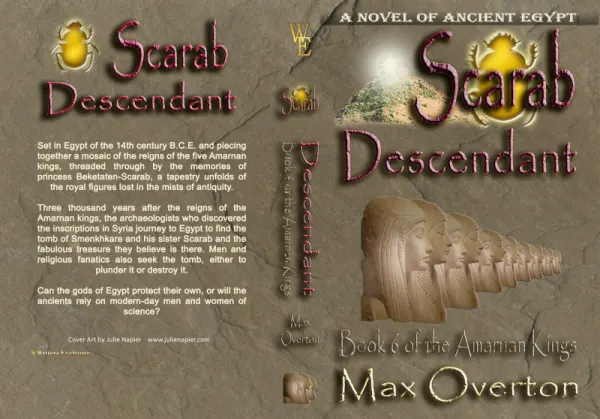
She was born in the shadow of gods--but dared to speak with her own voice.
Read More →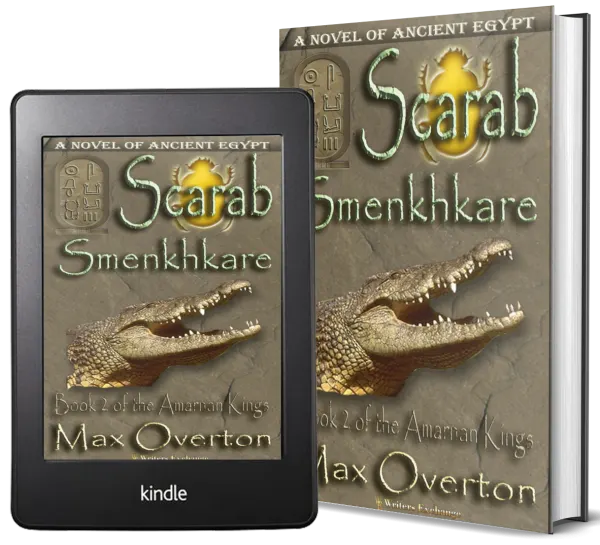
He rose from the ashes of betrayal--but her voice was the flame that lit his path.
Read More →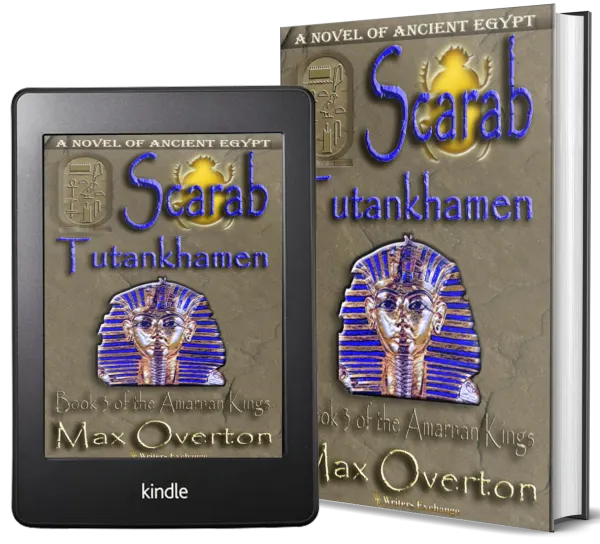
Two brothers. One throne. And a sister caught in the crossfire of history.
Read More →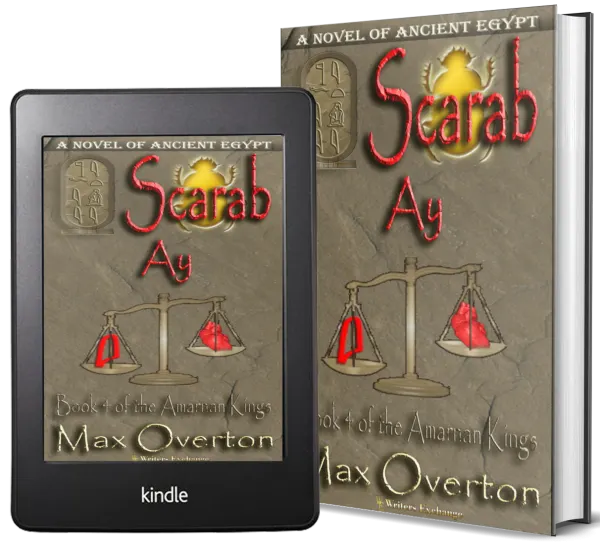
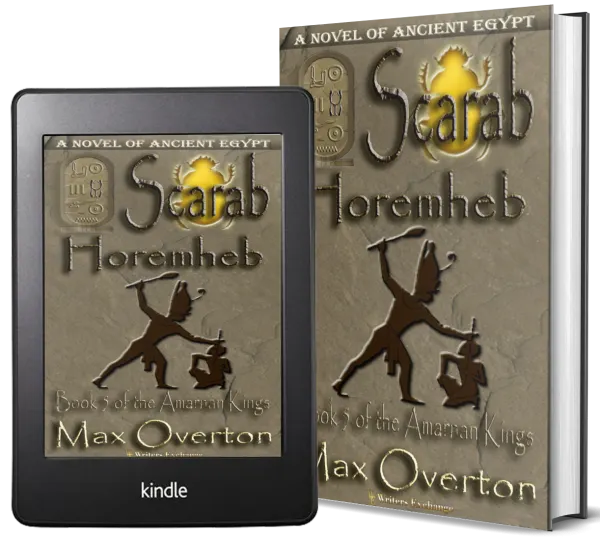
He rose from war. She rose from silence. And the gods were watching them both.
Read More →★★★★☆This book is the conclusion of the story of Princess Beketaten, A.K.A. Scarab and takes place 3,000 years after the reigns of the last pharaohs of the 18th dynasty in ancient Egypt. I have truly enjoyed this series and will miss looking forward to a next installment. Except for the prologue, this book takes place in present day and has a different feel to it - think Indiana Jones or "Raiders of the Lost Ark". Rather than historical fiction, it has an adventure theme and involves a race to find the hidden tomb of Smenkhkare and his sister Scarab. One group wants to plunder its' riches, and another wants to protect and preserve it from greedy people.
While previous prologues and epilogues take place in the present around the 1960's and the rest of the book in ancient Egypt, this book #6 is just the opposite. The prologue does take place in ancient Egypt and has Khu, son of Pa-it, taking the body of King Neferkheperu Scarab, his beloved wife, from the fields of Kadesh to Kemet. His mission is to bury her as befits her station as King of Kemet and sister, daughter, and mother of kings. After his mission is accomplished, he lives below the cliff face for 20 years protecting the tomb. After he dies, he continues protecting her beyond the grave. The epilogue is also from beyond the grave and has a twist for a surprise ending.
The rest of the book focuses on Dr. Danielle Hanser of a British archaeological expedition to the Orontes Valley in Syria where the team stumbled upon a series of chambers in a cave filled with hieroglyphs that tells the story of an Egyptian princess (books 1-5). Dani is the one who translates the story. How does Dani translate these passages when Egyptology is not her specialty? "It's almost impossible for someone to get true meaning from symbols without years of study - it is like she was born with an understanding of hieroglyphs"! Dr. Ahmed Bashir of the Syrian Dept. of National History becomes very interested when translations reveal there is an undiscovered royal tomb in Egypt containing the bodies of Smenkhkare and possibly that of Princess Beketaten. Bashir wants to find the tomb and plunder it by selling the priceless artifacts on the black market. He therefore takes away all the possessions of the archaeological team including the scarab stone and, with only the clothes on their backs, he puts them on a plane for England. His treachery also has him charging them with scientific improprieties so they can't reenter Syria.
Dani is suspended for six months from her job at Midland Univ. because of the allegations. She vows to travel to Egypt, find the tomb, protect it and protect the body of Scarab. Her #1 priority is to find the carved golden scarab, which hides itself as an ordinary sandstone rock to everyone but believers. Bashir took it from her in Syria. He had no clue what it was - he only knew it was valuable to her. It is a talisman imbued with the great power of the Nine Gods of Iunu; and since Dani seems to be a descendant of Scarab, she needs it to find the hidden tomb before Bashir does. Her visa request to enter Egypt is refused so she, Marc Andrews, and Daffyd Rhy-Williams from her team decide to go in illegally through Libya. Bashir also travels to Egypt and meets up with Colonel Sarraj, a ruthless military man, whom he enlists to help him find the tomb. Sarraj has his own agenda - he wants to form a coup, gain power, and become president of Egypt.
The race is on to find the tomb. First the team hires a driver named Muammar al-Hadi to drive their jeep from Benghazi to Al Jawf. In the meantime, a free-lance journalist in England, Nick Evans, hears about Dani's story and decides to go to Egypt to find her and her great story. All kinds of adventures occur in the desert including asking a Sheik for help, Bedouin warriors kidnapping the infidels for ransom, the infidels escaping, survival in the desert, Bashir and Sarraj hot on their trail, the Bedouins hot on the team's trail, Nick Evans going undercover to spy on Bashir, museum officials getting involved when they find a cliff shaft which could possibly be a tomb, impossibly finding a notch in a cliff where the sun shines through and green vegetation pointing to a tomb, Dani without her notes and translations against Bashir who has them all, and much more. Does she find her precious scarab, and who gets to the tomb first? Is Princess Beketaten entombed there?
If you like ancient Egyptian historical fiction, you will like this series. It is best to read it in order to preserve the flow of the whole. This was an epic journey and one well worth reading. Don't forget that twist at the end.
Reviewed By: Dyana
★★★★☆Golden Scarab bewitches us. Scarab, previously known as a no-name child of King Nebmaetre of Egypt's Middle Kingdom, then named Beketaten, who in previous books of Overton's series came of age (Bk 1), fought against her usurping Uncle Ay on the side of her brother Shmenkhkare (Bk 2), continues the battle alongside her older brother Shmenkhkare against the cruel and ambitious Ay and her younger brother Tuthankamen (Bk 3), finally falls under the power of King Ay's adopted son Nakhtmin, then turns the tables on her worst enemies, clearing the way for Horemheb to come to power and her ex-lover Paramessu to become Horemheb's successor and eventually her son Set to sit on the throne of Egypt (Bk 4). In The Amarnan Kinds Book 5: Scarab - Horemheb, Overton combines his story with the Biblical story of the Hebrews' escape from Egypt, with former King Ahkenaten resurfacing as Yahmose (Moses) aided in the Hebrews/Khabirus' exodus from slavery in Egypt by Jesua, a warrior follower of Scarab.
This tale has been 'read' to us from the beginning by a British female archaeologist Dani, who has found Scarab's tomb, apparently, in modern-day Syria, on the walls of which the aging Scarab had recorded her life story. It emerges at the end of Book 5 that Scarab is not buried in the tomb in Syria, as we had thought all along, but that her husband Khu had taken her body to her brother Shmenkhkare's hidden tomb in Egypt and secretly buried her there. So the stage is set for Book 6, where archaeologist Dani, apparently a descendant of Scarab's, is going to wield the golden scarab she found in the Syrian excavation, to assist her as she deals with unearthing her ancestor's body and story and fending off the efforts of a Saudi Arabian official who threatens the lives of the British archaeologists as well as the integrity of the history of Scarab.
If this sounds a bit far-fetched, it is to the credit of the storyteller Max Overton that it all goes down smoothly, and delightfully, as Scarab's marvelous resilience and resourceful character grow slowly from the little girl playing with a dung beetle in Book 1 into the queen wielding the power of the gods of Egypt in Book 5. She restores Ma'at, the balance of justice and peace, to her country, just as any good fictional heroine should. We wait on Book 6 of The Amarnan Kings: Scarab - Descendant to see if Dani can do as well as her ancestor against the greed and ambition of present-day despots!
Reviewed By: Paul Burnette
★★★★☆This entire series was an amazing way of looking at the 18th Dynasty as opposed to what we know from the history books. Why couldn't Smenkhare and Tut have died at the same time, why couldn't Moses have been a previous king who disappeared for years but continued in is "odd" belief that there was only one God? So many times throughout the first five books, and caught myself smiling at the in-depth research and story telling of these "what ifs." I would absolutely recommend this series to anyone who loves ancient Egyptian culture or anyone who loves court intrigue and epic story telling!
The last book was a very different feel, but equally as good. A perfect way to wrap up the present-day story, and also a few good finishing touches on Scarab's story.
This entire series goes down on my favorites of all time list, and I wish more people knew about it!
Reviewed By: Holly
★★★★☆The series ended back on a better note. This book read like a movie and though at times it felt like it was unbelievable, it was a fun read. I still liked the first three books the best.
Reviewed By: Stephanie
★★★★★Entertaining reading!
The Amarnan Kings series is a very readable, off-beat, and entertaining group of books. It has about any genre you might look for - from archaeology, to mystery, to fantasy, and a new take on ancient Egyptian religion and life in ancient times. Each book is a fairly complete story in itself, with enough hints to make you want to get the next book.
Reviewed By: Rhonda J. Hunter
★★★★★18th dinasty desendants live again
This is an excellent book, its really the closure to the Scarab collection, It keeps you wanting to keep reading and its hard to put it down,there stories left unfinished in the scarab series, and people you want to deal with, this gives you that satisfaction. If you love History particularly dynasties this carries a lot of reality mix with exiting tales
Reviewed By: SARA GREER
★★★★☆Great Book
Loved it all. Author kept my attention for sur. I love Egypt and it's history and it did feed my "desire" in reading about it . I suppose, history does not really apply as I had never heard of Pharaos in Syria before. Now I will have to read up on this! Good reading though, I loved it and wish there would be more of this type. Very entertaining though!
Reviewed By: Gudrun Wochinger
★★★★★great ending to a great series
This whole set of books were great. I read one right after the other so I could find out what was going to happen next. You need to make sure you read them in order or your history is going to be messed up. If you enjoy ancient Egypt, read this set. I really think you will like the Scarab series.
Reviewed By: Kindle Customer
★★★☆☆Not up to the Quality of the First Five in the Series
I bought this book with great anticipation. I have read all the other books in the series and thought they were fantastic. My reviews were very high on all the first five in the series. The characters were very well developed and the descriptions that Overton wrote actually put you there as a deeply involved participant. You could actually become any of the characters they were so well written. The writing skills Overton displays actually makes you feel the heat of the desert sun, you were thirsty when the characters were and every emotion they felt you shared. Unfortunately, in this final book of the series he let me down. I didn't get the enjoyment and involvement factor in this book like I had in the others. It's almost as if he has lost interest in the series and wants to finish it quickly so that he can get on to another more interesting project. I don't find the depth and richness in this book that are VERY evident in his previous Amarnan Kings books. It is a shame for me because I was so looking forward to rejoining my "friends" and find out the rest of their story. Please don't get me wrong, the book is very readable and provides the story ending, but it is not up to Overton's normal high standards.
Reviewed By: Kindle Customer
★★★★★Fantastic finale
Have just finished the last book in The Amarnan Kings saga , what a great end to one of the best series of books I have ever read. I have read book 1 to book 6 end to end and feel lost now the journey is over. Every book has kept me enthralled from start to finish and the way Max writes puts you right into the story with vivid descriptions of life in Egypt in those times , I have lived through all Scarabs experiences and feel Max writes with passion and a great knowledge of the times. Praise must be given to these books and I look forward to reading many more Max Overton books. I have read the Lion of Scythia trilogy with the same zest and will now move on to the Demon trilogy. Fantastic books and I urge everybody to read them.
Reviewed By: Amazon Customer
★★★★☆Average
This, last book in the series, is weaker comparing to others, but is still interesting. I love stile of writing---it is easy and just flow.
Reviewed By: Mirjana Fogel-Petrovic
★★★★★A nice way of saying goodbye to this series
Although not set in ancient Egypt a nice conclusion and series wrap
Reviewed By: English Pete
★★★★☆Gripping yarn
A great finale to a gripping series, although I was sure it would all turn out right in the end, had to keep reading to make sure.
Reviewed By: Christopher Rowe
★★★★★The Amarnan Kings Books 1 to 6
I really enjoyed all these books. Books 2 to 5 were very good. Book 1 set out the characters and the broad view of the history and as a result was good, but not as riveting as the others. Book 6 concluded the story but was set in modern times and was therefore not as exciting to me. I can however recommend reading the whole series as they gave me a great deal of pleasure. Book 6 had lots of exclamation marks that were errors in processing by Amazon these were annoying.
Reviewed By: Derinard
★★★★★Scarab series
I loved them all! Couldn't wait to get back to them once I started reading. Of course, they are NOVELS, based on historical happenings, but not quite true to fact. One thing that annoyed me seriously is the author's use of "these ones". Trust me, I even looked this up to make sure I was right. This is improper English; redundant! Other than that, they were great!
Sue H., PA
Reviewed By: Sue Goodwin
Bought this book from us? Write a review from your account page — it appears here once approved.